
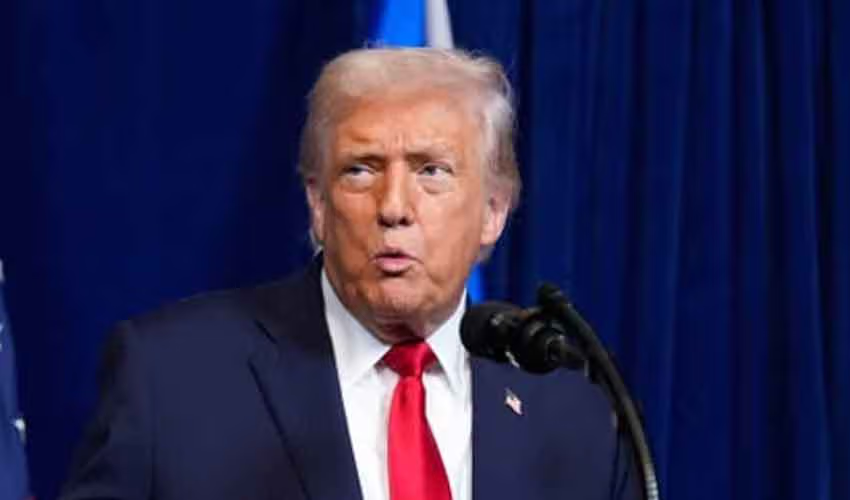
US President Donald Trump has threatened renewed military action against Iran, warning that Washington could launch another operation as the conflict continues to put pressure on global energy markets and American consumers.
Speaking at an election rally in Florida on Friday, Trump suggested that the United States could carry out another round of strikes under the military campaign known as Operation Epic Fury. His remarks came as he offered mixed messages about the timeline for ending the war, which has escalated tensions across the Middle East and contributed to rising fuel prices.
“We may do another little Epic Fury,” Trump told supporters, without explaining what additional military action could involve or identifying potential targets.
The president has repeatedly indicated that the conflict could end soon, but his statements have left uncertainty over whether Washington intends to pursue an immediate settlement or maintain pressure on Tehran before bringing the fighting to a close.
Earlier on Friday, Trump suggested that the United States could end the war relatively quickly, while questioning whether an immediate conclusion would be preferable to allowing the conflict to wind down gradually.
His latest comments come as the November 3 US midterm elections approach. The vote will determine control of Congress, where Republicans currently hold narrow majorities in both chambers, making economic concerns and rising fuel prices important political issues.
Trump has previously said the United States would not launch another attack on Iran before the midterm elections. His latest threat, however, has renewed questions about the administration’s military strategy and the possibility of further escalation.
Trump Insists Iran Must Never Obtain Nuclear Weapons
Trump has continued to defend the military campaign by arguing that Iran must not be allowed to develop nuclear weapons.
The president claimed that American military operations had severely weakened Iran’s military capabilities, including its air force and navy. He also argued that the country had suffered significant economic damage as a result of the conflict and related pressure from Washington.
Trump has used the phrase “Operation Economic Fury” when discussing economic pressure on Tehran, alongside the military campaign’s name, Operation Epic Fury.
Despite his claims of military success, Trump has not provided a definitive timeline for ending the war. His remarks have alternated between predictions of an imminent conclusion and warnings that additional military action remains possible.
The uncertainty has complicated expectations surrounding a potential diplomatic settlement. Any lasting agreement would need to address the major disagreements between Washington and Tehran, including Iran’s nuclear ambitions and the broader security situation in the region.
Trump has also linked the end of the conflict to lower oil prices, arguing that consumers could receive relief once hostilities stop.
Iran Considers Wider Retaliation Against Critical Infrastructure
Iran has reportedly prepared contingency plans for a broader response if the United States and Israel resume attacks.
According to the supplied report, two senior Iranian security officials said Tehran was considering targeting undersea communications cables in the Gulf as part of its potential retaliation.
Such infrastructure carries significant volumes of international data and supports communications between countries. Any disruption could affect telecommunications, internet connectivity and businesses that depend on reliable cross-border networks.
The reported plans add another layer of concern to a conflict that has already disrupted shipping, raised energy costs and increased the risk of damage to critical infrastructure.
The United States and Israel launched attacks on Iran on February 28, according to the supplied material. Tehran responded with strikes against Israel and Gulf countries hosting American military installations.
The wider conflict, including Israeli operations in Lebanon, has reportedly caused thousands of deaths and displaced millions of people.
Continued fighting threatens to create further humanitarian and economic consequences, particularly if additional countries or strategic facilities become involved.
Strait of Hormuz Blockade Keeps Oil Markets on Edge
The Strait of Hormuz remains one of the most important flashpoints in the conflict because of its role in international oil and gas transportation.
At the Florida rally, Trump said the blockade involving the strategic waterway remained in place and claimed the United States was receiving millions of barrels of oil each day through the region.
The strait connects the Persian Gulf with international shipping routes and serves as a critical passage for energy exports from Gulf producers. Disruptions can affect supply expectations, shipping costs and the prices paid by consumers around the world.
Trump said oil prices would fall once the war ended, presenting a resolution to the conflict as a potential source of economic relief.
However, energy prices also depend on production levels, transportation conditions, global demand and market expectations. Even if hostilities decline, the pace of any price reduction will depend on how quickly shipping and supply chains return to normal.
For American households, higher gasoline prices can increase the cost of commuting and transportation while putting additional pressure on household budgets.
These economic concerns have become particularly significant as voters prepare to decide control of Congress in the upcoming midterm elections.
Trump Says Cuba Could Be His Next Focus
During the same rally, Trump shifted attention to Cuba, saying the United States would turn toward the Caribbean nation after dealing with Iran.
He did not provide details about potential measures against Havana or explain what his administration might pursue.
Trump also claimed that the US stock market had reached an all-time high and defended tariffs as a central element of his economic and foreign policy agenda.
He argued that tariffs had helped prevent international conflicts and claimed that he had contributed to ending eight wars, including several through trade-related pressure.
Trump warned that removing tariffs would encourage companies to move factories outside the United States. His comments reflected his broader argument that trade restrictions can be used to protect American industry and influence the decisions of foreign governments.
However, the effectiveness and economic consequences of tariffs remain subjects of debate, particularly because import duties can also increase costs for businesses and consumers.
Trump Repeats Claims About Pakistan-India Conflict
Trump also revisited the conflict between Pakistan and India, repeating his claim that threats of trade penalties helped stop fighting between the two nuclear-armed countries.
He said he had urged both governments to halt hostilities or face restrictions on trade with the United States.
Trump claimed that he had threatened tariffs of 250% against both countries, arguing that such measures would make it difficult for other nations to conduct business with them.
He further asserted that 11 aircraft had been shot down during the Pakistan-India confrontation. These claims should be assessed against independently verified reporting and official statements from the countries involved.
Trump has frequently presented his claimed role in easing international conflicts as evidence that economic pressure can achieve diplomatic results without prolonged military engagement.
His latest comments came as he defended tariffs at home while warning that the United States might pursue additional military action against Iran.
Trump Predicts Progress on Russia-Ukraine War
The president also expressed optimism about the possibility of ending the Russia-Ukraine war, suggesting that a settlement could be reached soon.
He again cited his claim of having helped end eight wars as evidence of his ability to resolve international disputes. However, he provided no new details during the rally about a potential agreement between Moscow and Kyiv.
Trump’s comments highlighted the different approaches he has discussed for international conflicts, ranging from negotiations and economic pressure to the threat of military force.
The president also criticized Democrats ahead of the midterm elections, accusing the party of supporting candidates he considers too extreme. He urged Florida voters to back his party’s candidate.
Trump additionally called on Democratic Congresswoman Ilhan Omar to resign, directing personal criticism at the lawmaker and referring to her Somali origins.
The rally combined foreign policy warnings, economic arguments and campaign messaging as Trump sought to defend his administration’s approach to international conflicts.
With the president threatening another operation against Iran while continuing to promise that the war could end soon, uncertainty remains over Washington’s next move. The outcome could have major consequences for Middle Eastern security, global oil markets and the political debate over fuel prices ahead of the US midterm elections.