
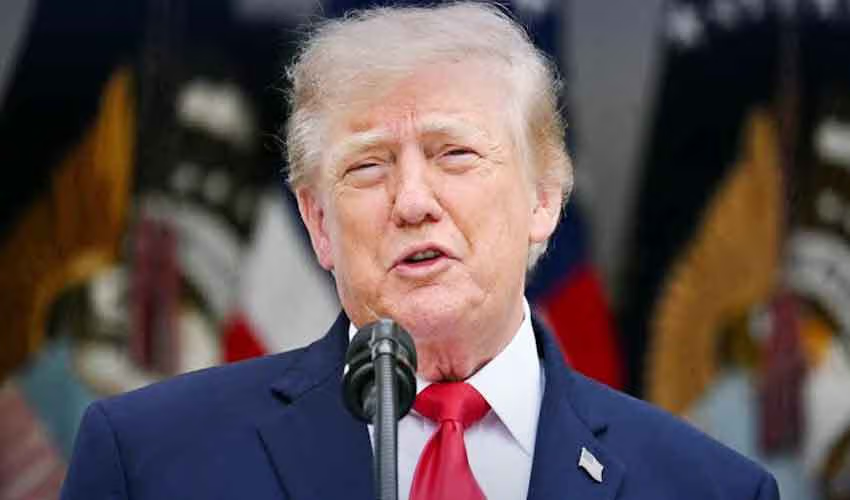
US President Donald Trump has criticized the summer ceasefire with Iran, describing the temporary pause in hostilities as a “waste of time” while insisting that the conflict could end soon. His remarks came as he defended US military operations against Tehran and claimed that American and Israeli strikes had significantly weakened Iran’s military capabilities.
Speaking at a Republican campaign event in Mississippi, Trump said he had reluctantly agreed to the ceasefire after receiving advice from experts, despite his reservations about the arrangement.
The president argued that the pause had produced limited benefits and allowed vessels to pass through the strategically important Strait of Hormuz without resolving the underlying conflict.
“We did a little ceasefire, which I never liked very much. I considered it sort of a waste of time,” Trump said during the rally.
He described the decision as an attempt to accommodate the situation but maintained that the temporary truce had not delivered the results he wanted.
Trump’s comments also renewed questions about Washington’s broader strategy toward Iran, particularly as the administration continues to present the military campaign as necessary to address perceived threats to US security.
Trump Claims Iran Had Missiles Capable of Reaching Europe
During his speech, Trump claimed that Iran possessed missiles capable of reaching European targets and suggested that American cities could also have faced a potential threat.
“They could have targeted San Diego and Los Angeles; they could have targeted our other cities as well,” he said.
The president questioned how Iran had developed its missile capabilities and argued that the situation required decisive action from Washington.
Trump also claimed that the United States had substantially reduced Iran’s military strength through its campaign alongside Israel. He portrayed the operations as a major setback for Tehran and defended the decision to use military force.
However, the missile-range assertions and the extent of the damage to Iran’s military capabilities should be distinguished from independently verified assessments. The remarks provided no additional technical evidence establishing the specific reach of the missiles Trump described.
The president also asserted that Iran had been approximately two weeks away from acquiring nuclear weapons before the military campaign. He used that claim to reinforce his argument that the United States needed to prevent Tehran from obtaining such weapons.
Iran’s nuclear program has remained a major source of tension between Tehran and Washington, with disagreements over enrichment activities, international monitoring and long-term security guarantees complicating diplomatic efforts.
Strait of Hormuz Remains Central to the Iran Conflict
Trump also addressed the Strait of Hormuz, one of the world’s most strategically important maritime routes for transporting oil and other energy products.
The president claimed that the United States maintained control over the waterway and said Iranian vessels had been unable to break through the American blockade for several months.
He further asserted that the United States was extracting more oil through the route than before the conflict began.
These statements come amid continuing concerns about shipping security, energy supplies and the potential economic consequences of a prolonged confrontation between Washington and Tehran.
The Strait of Hormuz connects the Persian Gulf with the Gulf of Oman and the wider Indian Ocean. Its importance to international oil transportation means that disruptions can affect energy prices, shipping costs and supply expectations across global markets.
Trump has repeatedly linked the eventual end of the war to expectations of lower oil prices. However, any sustained reduction in energy costs would depend on developments in the conflict, the security of commercial shipping and broader market conditions.
His latest remarks suggest that the administration continues to regard control over maritime access and pressure on Iranian shipping as important elements of its strategy.
Trump Says Previous Presidents Should Have Acted Earlier
Trump argued that earlier US administrations should have confronted Iran’s military and nuclear ambitions long before the current conflict.
“This should have been done by other presidents a long time ago,” he said.
The president presented the military campaign as an overdue response to what he described as a growing threat. He also insisted that the conflict would end soon, although he did not provide a specific timeline or explain what conditions would bring the fighting to a close.
His comments reflect a position that combines confidence in the effectiveness of military action with uncertainty about the path toward a lasting settlement.
A durable resolution would likely require decisions involving Iran’s nuclear activities, regional security arrangements and the future of maritime traffic through the Strait of Hormuz.
The competing positions of Washington and Tehran have made diplomatic progress difficult, while the possibility of renewed strikes continues to raise concerns about further escalation.
Background: US-Iran Ceasefire and Renewed Military Action
The supplied report states that the United States and Israel launched their military campaign against Iran on February 28. It also describes a ceasefire arrangement reached in June through a memorandum of understanding involving Washington and Tehran, with provisions covering hostilities on multiple fronts, including Lebanon.
According to the material, the truce subsequently broke down, and the United States resumed large-scale airstrikes against Iran on July 8, accusing Tehran of violating previous understandings concerning the Strait of Hormuz.
The reported sequence of events illustrates the fragility of efforts to pause the fighting. A temporary ceasefire can reduce immediate hostilities, but unresolved disputes over military activity, shipping access and security commitments can undermine the arrangement.
Trump’s criticism of the truce indicates that he views the pause as an ineffective step toward achieving his administration’s objectives. Nevertheless, his prediction that the conflict will end soon leaves open questions about whether Washington expects a negotiated agreement, further military operations or another outcome.
With the Strait of Hormuz remaining a major point of contention and Iran’s nuclear program still central to the dispute, developments in US policy could have significant implications for Middle Eastern security, international shipping and global energy markets.