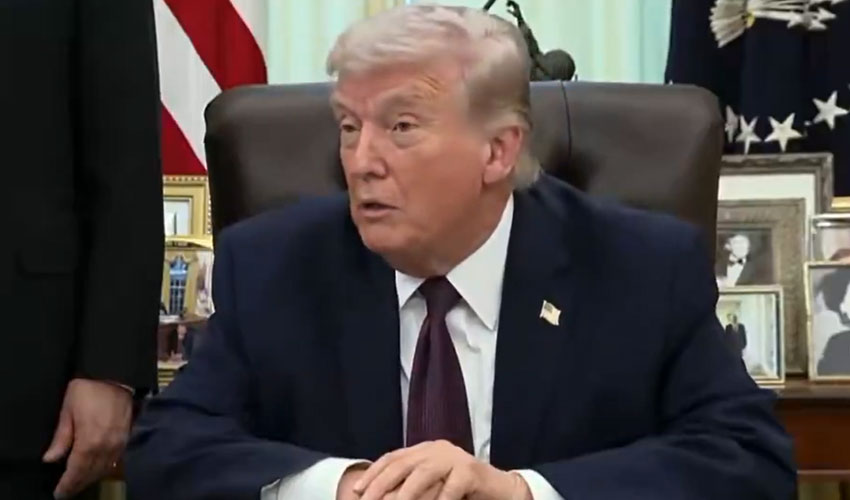
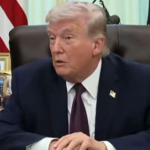
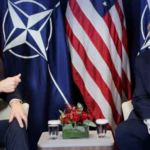
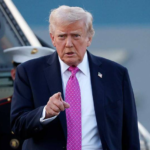
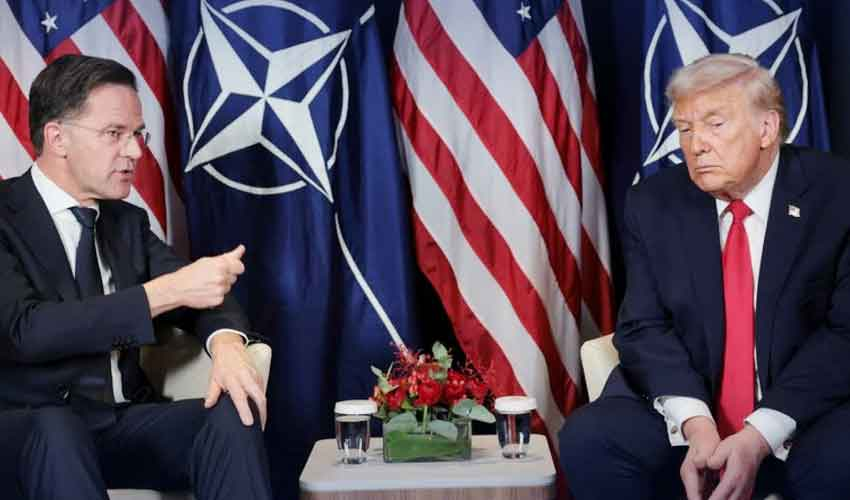
Washington, D.C. – US President Donald Trump voiced sharp criticism of NATO during a private meeting with Secretary-General Mark Rutte, expressing frustration that several alliance members failed to support Washington during the ongoing Iran war.
Speaking after the two-hour meeting at the White House, Rutte described the discussion as “frank” and “open,” emphasizing his close personal relationship with Trump. “He is clearly disappointed with many NATO allies, and I can see his point,” Rutte told CNN’s The Lead with Jake Tapper.
NATO Members Accused of Failing Commitments
Trump has repeatedly criticized NATO as a “paper tiger,” arguing that some European countries relied on US security guarantees while providing inadequate support during US-Israeli operations in Iran. Several NATO nations denied US military planes access to their airspace and declined to deploy naval forces to help reopen the Strait of Hormuz, a critical route for global oil shipments.
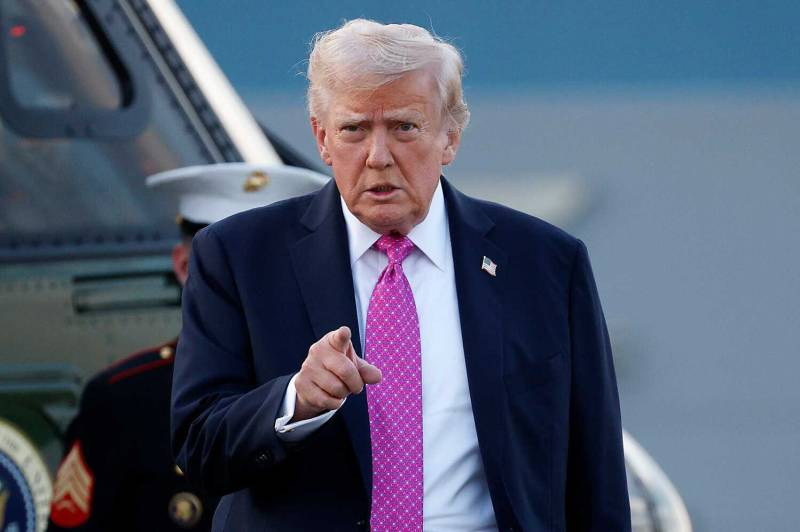
Rutte noted that while “some” NATO members failed to meet their commitments, “the large majority of Europeans” were still helpful. However, Trump posted on Truth Social that “NATO wasn’t there when we needed them, and they won’t be there if we need them again,” underscoring his frustration with the alliance.
Tensions Amid Ceasefire and Middle East Operations
Although Trump announced a two-week ceasefire in Iran, the ongoing conflict has strained relations with Europe, with lingering diplomatic consequences. White House spokeswoman Karoline Leavitt said NATO countries “turned their backs on the American people” who fund the alliance, adding that Trump planned a “very frank and candid conversation” with Rutte.
European diplomats noted that countries dependent on Gulf oil are unlikely to join US-led mine-clearing or other operations to reopen the Strait of Hormuz while hostilities continue, despite Trump’s calls for action.
Strategic Concerns for NATO
Analysts warn that Trump’s criticism places NATO at a “dangerous point” as the alliance balances commitments in Ukraine and the Middle East. Oana Lungescu, a former NATO spokesperson now at the Royal United Services Institute, described the situation as a significant strain on transatlantic relations.
While NATO’s core mission focuses on North America and Europe, Trump’s expectations for Middle East engagement, including potential operations to secure Hormuz, remain unclear. Rutte’s role during the White House meeting included discussions on defense-industry cooperation and ongoing conflicts in Iran and Ukraine.
Implications for European-US Relations
Trump’s focus on the Middle East, coupled with criticism of Ukraine and threats over Greenland, has alarmed NATO members. White House spokeswoman Anna Kelly highlighted that Trump’s disappointment stems from allies’ unwillingness to support “Operation Epic Fury,” despite the operation benefiting European security. “As he said, the United States will remember,” Kelly added.