
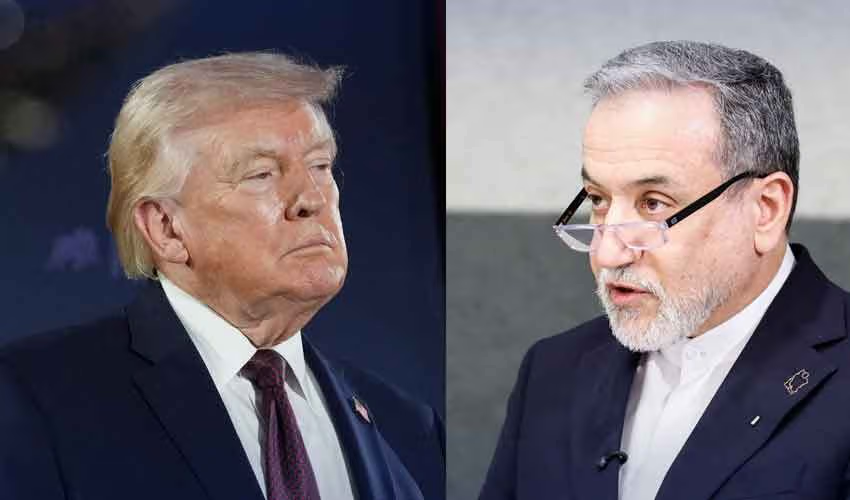
US President Donald Trump has confirmed that Washington and Tehran are engaged in discussions aimed at reducing tensions, but he acknowledged that Iran is not yet ready to reach a final agreement.
Speaking at the White House on Friday, Trump said negotiations with Iran were continuing and suggested that Tehran was taking the talks more seriously than before. However, he warned that a breakthrough was not guaranteed.
“We are talking to them,” Trump told reporters. “I think they’re being serious. I think they are being by far the most serious that we’ve seen them, but that doesn’t mean we get there. We’ll see what happens.”
The US president said Iran had shown a greater willingness to engage diplomatically but added that the country was still not prepared to sign a final deal.
“Iran is not ready for a deal yet,” Trump said, while maintaining that the current situation in the Middle East has changed significantly.
Trump Says Regional Balance of Power Has Shifted
Trump also claimed that Iran’s influence across the Middle East has declined, saying the country is no longer posing the same level of challenge as in previous years.
The comments come amid ongoing tensions between Washington and Tehran over regional security, military activities, and Iran’s nuclear programme.
Trump also addressed a possible US-Saudi nuclear cooperation agreement, repeating that any deal with Riyadh would depend on Saudi Arabia joining the Abraham Accords, a US-backed framework aimed at expanding diplomatic relations between Israel and Arab countries.
“There will be no deal with Saudi Arabia until it becomes part of the Abraham Accords,” Trump said.
He also warned that it would be a serious problem if China and Russia provided additional support to Iran during the current period of diplomatic uncertainty.
Iran Says It Will Not Surrender to Pressure
While Trump expressed cautious optimism, Iranian officials offered a different view of the negotiations.
Iranian Foreign Minister Abbas Araghchi said communication channels with the United States remain open but argued that Washington’s approach based on pressure and threats remains the biggest barrier to progress.
Speaking during the Shanghai Cooperation Organization (SCO) foreign ministers’ meeting in Kyrgyzstan, Araghchi said Iran does not oppose mediation efforts but believes the main challenge is the US strategy toward negotiations.
According to Araghchi, Tehran will not accept demands made through intimidation or military threats.
“Iran will not bow to American bullying,” Araghchi said, adding that Iran would continue defending what it considers its national interests.
He stressed that Tehran would maintain its position and would not abandon its principles because of external pressure.
Iran Continues Talks With Russia and China
Araghchi said Iran remains in close contact with Russia and China as diplomatic discussions continue.
He said he held talks with Chinese Foreign Minister Wang Yi and Russian Foreign Minister Sergey Lavrov during the SCO meeting.
The Iranian foreign minister also confirmed that Tehran has discussed diplomatic proposals with Pakistan, which has previously played a role in regional mediation efforts.
However, Araghchi emphasized that the main issue in US-Iran relations is not a lack of mediators but disagreements over Washington’s negotiating approach.
Strait of Hormuz Remains Key Issue for Tehran
Araghchi said protecting Iran’s interests in the Strait of Hormuz remains a major priority for Tehran.
The strategically important waterway is one of the world’s busiest energy shipping routes and has frequently been at the centre of disputes involving Iran, the United States, and regional allies.
The Iranian foreign minister said Tehran would continue defending its position in the region and protecting its interests regardless of outside pressure.
Speaking after the SCO summit, Araghchi described the organization as an increasingly important regional platform and called for stronger cooperation among member states against what he described as unilateral policies by Western countries.
The latest statements from Washington and Tehran highlight continued diplomatic uncertainty, with both sides maintaining different positions on how future negotiations should proceed.