
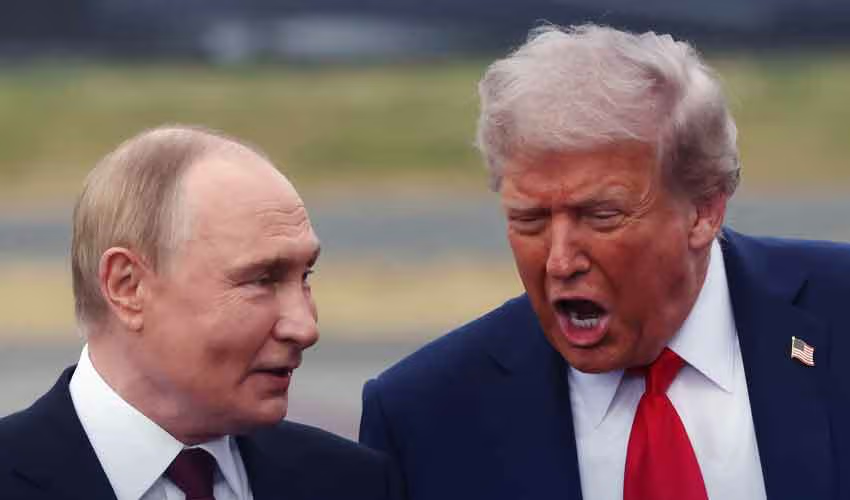
US President Donald Trump has waived key Russia-related sanctions and tariffs that were due to take effect under legislation he signed last month, citing the national interests of the United States.
In an executive order released by the White House on Friday, Trump said the waiver would remain in place until he or senior administration officials determine that further action is appropriate. The decision affects measures designed to increase economic pressure on Russia over its invasion of Ukraine, which began in 2022.
The move comes as Trump faces pressure over fuel prices and his administration’s approach to the war in Ukraine. It also raises questions about how Washington will balance efforts to pressure Moscow with concerns over the economic consequences of additional restrictions on countries that purchase Russian energy.
Trump Cites US National Interests in Sanctions Waiver
Trump said in the executive order that he had informed Congress of his decision to waive the measures, arguing that the exemption was in the country’s national interests.
“I have submitted to the Congress a certification that the issuance of such a waiver at this time is in the national interests of the United States,” Trump said.
The waiver delays the implementation of key provisions intended to penalize countries that continue purchasing Russian oil and gas or help Moscow evade existing sanctions.
Trump signed the Lindsey O. Graham Sanctioning Russia and Iran Act of 2026 in mid-September. The legislation was designed to give the US administration additional tools to pressure Russia and countries maintaining energy trade with Moscow.
Under the law, the president can waive the relevant restrictions by notifying Congress that their implementation would not serve US national interests.
The executive order does not establish a fixed end date for the waiver. Instead, it allows the exemption to remain effective until Trump or designated senior officials decide that further action is warranted.
Russia Sanctions Bill Targeted Oil and Gas Buyers
The legislation included provisions allowing tariffs of up to 100% on certain imports into the United States from countries purchasing Russian energy or helping Russia circumvent sanctions.
The measures were intended to increase the economic costs of Russia’s continued war in Ukraine by putting pressure on its international trading partners.
Under the law, the proposed tariffs could apply to goods from the five largest importers of Russian crude oil or natural gas, as well as countries that knowingly continued purchasing Russian energy after the specified period or ranked among the leading countries helping Moscow evade sanctions.
The potential scale of the tariffs made the legislation particularly significant for countries with substantial energy trade ties to Russia.
China and India, two of the largest buyers of Russian oil, have previously raised concerns about the proposed restrictions.
Beijing has said it opposes what it describes as the extraterritorial application of another country’s laws without a basis in international law. India has also warned Washington that additional tariffs could affect bilateral relations.
The waiver temporarily eases the immediate threat of the measures taking effect, although the administration has not ruled out further action at a later date.
Oil Prices and US Midterm Elections Add to Pressure
The decision comes as American consumers face higher energy costs, with the US-Israeli war against Iran cited as a major factor behind recent fuel-price pressures.
With the US midterm elections approaching in November, Trump’s Republican Party is seeking to maintain its narrow majorities in both chambers of Congress.
Analysts have warned that imposing steep tariffs on countries buying Russian energy could contribute to higher oil prices, depending on how affected countries and energy markets respond.
Restrictions on Russian oil trade could disrupt established supply arrangements or prompt buyers to seek alternative sources, potentially adding pressure to global energy prices.
The administration’s decision to waive the measures therefore comes against a backdrop of competing considerations: maintaining pressure on Russia, limiting economic disruption and addressing domestic concerns about fuel costs.
Trump has also drawn criticism over his approach to the war in Ukraine. While his administration has faced calls to increase pressure on Moscow, the president has publicly criticized Ukrainian President Volodymyr Zelenskyy and questioned Kyiv’s leadership.
The latest waiver adds another development to the debate over Washington’s strategy toward Russia and the economic tools available to influence the conflict.
Democratic Lawmaker Accuses Trump of Giving in to Putin
The decision prompted criticism from US Representative Don Beyer, a Virginia Democrat, who accused Trump of weakening efforts to hold Russia accountable for its invasion of Ukraine.
“Trump’s latest surrender to Putin again betrays our Ukrainian partners and defies clear congressional intent of legislation designed to punish Russia for its illegal war of aggression,” Beyer said in a statement.
Beyer’s criticism reflects concerns among opponents of the waiver that delaying the sanctions could reduce the economic pressure Congress intended to place on Moscow and its trading partners.
The legislation’s principal congressional backer was the late Senator Lindsey Graham, a Republican from South Carolina. Its provisions were intended to give the administration a stronger mechanism for targeting countries that continued purchasing Russian energy.
However, the law also gives the president authority to exempt countries from the restrictions when he determines that doing so serves US national interests.
That provision gives the White House considerable discretion over when the measures should be applied, even after the legislation has been enacted.
Previous Diesel Deal Also Drew Congressional Criticism
Trump’s latest decision follows criticism from several US senators, including members of his own Republican Party, over a recent diesel-related agreement with Russia.
Under the deal described in the reports, Trump agreed to lift sanctions on Russian exports while Russia agreed to supply diesel to global markets in an effort to ease fuel-price pressures.
Critics argued that allowing Russian exports to proceed could provide Moscow with additional revenue that might support its military campaign in Ukraine.
The dispute highlighted tensions within Washington over whether easing certain restrictions could help stabilize energy markets or undermine broader efforts to limit Russia’s financial resources.
The new waiver has revived similar questions about the relationship between energy prices, economic sanctions and US foreign policy.
Russian Envoy Welcomes Trump’s Decision
Kirill Dmitriev, Russian President Vladimir Putin’s investment envoy, welcomed the waiver, describing it as a significant development in US-Russia relations.
In a post on X, Dmitriev called the decision “a truly historic moment.”
He argued that the legislation could have effectively halted economic cooperation between Russia and the United States if its restrictions had been fully implemented.
His reaction contrasted with the criticism from US Democratic lawmakers, who said the waiver undermined congressional efforts to punish Moscow for the war in Ukraine.
The executive order leaves the administration with the option of reconsidering the restrictions in the future. For now, the decision marks a pause in the implementation of key Russia-related economic penalties while Washington continues to weigh its diplomatic, economic and domestic priorities.