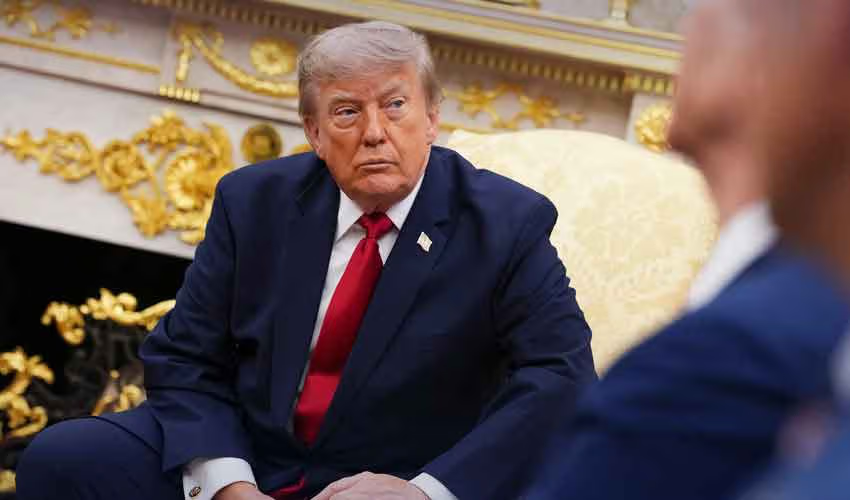
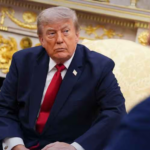
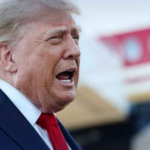
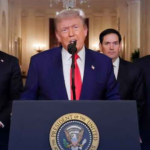
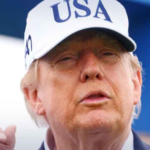

For the first time in more than three decades, the United States will resume nuclear weapons testing, ending a 30-year moratorium that began after the Cold War. President Donald Trump announced the decision on Thursday, arguing that renewed testing is necessary to ensure the U.S. maintains strategic dominance over Russia and China.
The announcement came just hours before Trump’s scheduled summit with Chinese President Xi Jinping in South Korea, signaling a bold—and controversial—message of American military readiness ahead of critical diplomatic talks.
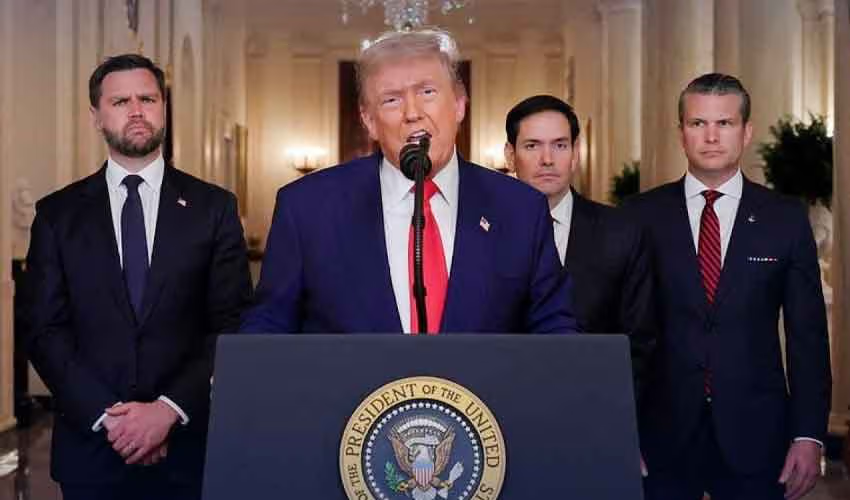
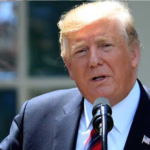
“Because of other countries’ testing programs, I have instructed the Department of War to start testing our Nuclear Weapons on an equal basis,” Trump declared in a social media post. “The United States has the largest nuclear arsenal in the world, followed by Russia—with China in a distant third.”
Trump described nuclear testing as an unavoidable step to maintain deterrence and national security, while warning that China’s growing nuclear program could rival the U.S. within five years.
A Historic Policy Shift
The decision marks the end of an era that began in 1992, when President George H.W. Bush halted nuclear testing following the collapse of the Soviet Union. The last U.S. nuclear test, known as Project Divider, took place on September 23, 1992, at the Nevada Test Site—the 1,054th detonation in American history.
That facility, located about 65 miles north of Las Vegas, has remained under maintenance and readiness since the moratorium. According to the National Museum of Nuclear Science and History, the site could quickly be reactivated if authorized by the president or the Department of Defense.
Trump’s move effectively revives testing at a location that has been dormant for decades, reflecting a dramatic shift in U.S. nuclear strategy.
Global Ramifications and Strategic Significance
Analysts warn that the resumption of nuclear testing could ignite a new global arms race, particularly with Russia and China, both of which have ramped up their nuclear modernization programs in recent years.
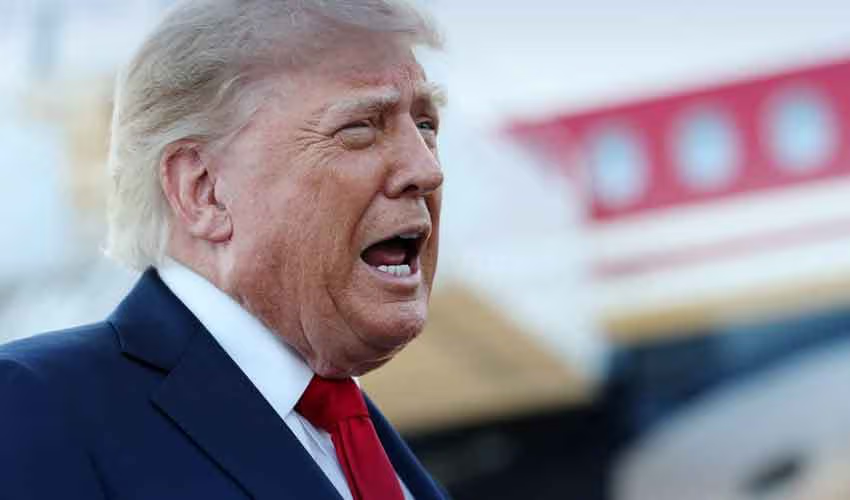
The timing of Trump’s announcement—coinciding with his arrival in South Korea aboard Marine One—was widely interpreted as a show of strength before high-stakes talks with Xi. It comes amid increasing geopolitical tension in Asia, including territorial disputes in the South China Sea and competition for influence in the Pacific.
“The process will begin immediately,” Trump said, without disclosing the technical details or timeline for the first tests.
Experts note that while the U.S. arsenal remains the most advanced in the world, Trump’s directive could undermine decades of international nonproliferation efforts and strain relations with NATO allies who favor continued restraint.
Nuclear policy scholars also point out that the Comprehensive Nuclear-Test-Ban Treaty (CTBT), signed in 1996, prohibits all nuclear explosions. Though the U.S. never ratified it, the country has voluntarily adhered to its principles—until now.
Strategic Context and Political Implications
The decision comes as Trump seeks to project strength and deterrence in an increasingly multipolar world. His administration has emphasized “peace through power” and expanded funding for modernizing the nuclear triad—the land, air, and sea-based components of America’s nuclear arsenal.
Trump’s timing also appears deliberate. His meeting with Xi Jinping in South Korea—the first since 2019—focuses on trade, security, and China’s expanding influence. The nuclear announcement effectively sets the tone for the summit, reminding Beijing of America’s military edge.
Defense experts say the move will likely draw mixed reactions in Washington. Supporters argue that modernization through limited testing strengthens deterrence and ensures safety reliability of aging warheads. Critics, however, warn that it risks destabilizing international norms and provoking adversaries into reciprocal testing.
As the world reacts to the announcement, attention now turns to Nevada, where preparations for renewed testing could soon begin—and to the global stage, where the U.S. faces growing scrutiny over its reassertion of nuclear power.