
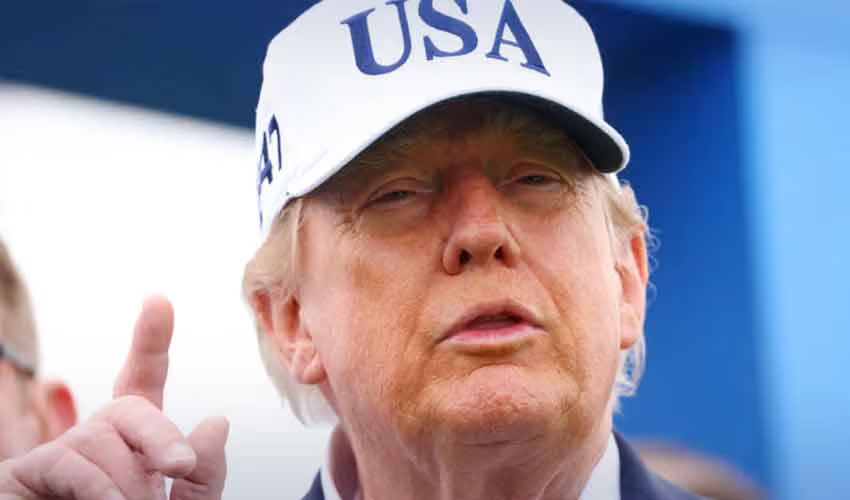
President Donald Trump has suggested that the United States could potentially remain involved in Iran after the war and even retain access to the country’s oil, drawing a comparison with Washington’s approach toward Venezuela.
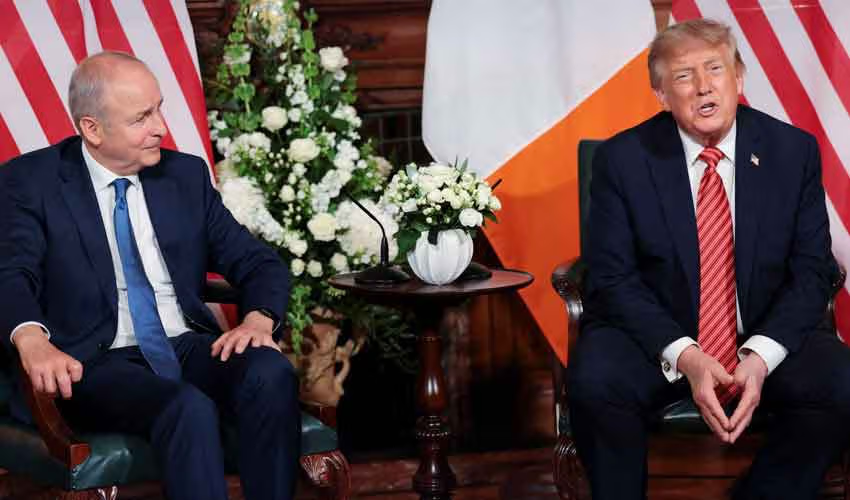
Trump made the comments while visiting Ireland, where he attended the Irish Open golf championship and spoke about the future of the conflict with Iran.
The president again predicted that the war could end this year, although he suggested that the fighting could continue until around the time of the US midterm elections in November.
His latest remarks introduced the possibility of a longer-term US presence in Iran even after the conflict ends.
Trump Raises Possibility of Keeping Iranian Oil
Trump said the United States could eventually leave Iran unless Washington decides to remain involved and benefit from the country’s oil resources.
“We’ll ultimately get out of Iran, unless we decide to stay and keep the oil like Venezuela,” Trump said.
He pointed to the US arrangement involving Venezuela as an example of how Washington could potentially generate revenue from another country’s oil resources.
Trump claimed that revenue from Venezuela had already more than covered the costs of the war, according to his remarks.
The comments marked a notable expansion of Trump’s public discussion about what could happen to Iran’s energy resources after the conflict.
President Still Predicts Iran War Will End This Year
Despite raising the possibility of a prolonged US role, Trump continued to say that he expects the war with Iran to end in 2026.
He suggested that the conflict could potentially continue until shortly after the November US midterm elections.
Trump has repeatedly said that he wants an agreement with Tehran, but has also insisted that Washington will only accept what he considers a favorable deal.
The president said he would not agree to an arrangement that he believes fails to protect US interests.
Trump Says Iran Is Seeking Talks
Trump also claimed that Iran has been repeatedly reaching out about negotiations.
According to the president, Tehran has been “calling constantly” in an effort to discuss peace.
Iran has previously disputed similar claims about the frequency and nature of contacts with Washington, leaving the status of any potential negotiations unclear.
Trump nevertheless maintained that the United States remains open to a deal if the terms meet his expectations.
Gasoline Prices Could ‘Drop Like a Rock’
Trump also connected the end of the Iran conflict to energy prices in the United States.
Speaking at the Irish Open, he predicted that gasoline prices would “drop like a rock” once the war comes to an end.
Oil markets have faced significant volatility during the conflict, with traders watching developments in the Middle East closely.
The situation around Saudi Arabia has added to concerns about potential disruptions to global energy supplies.
An attack on a Saudi oil pipeline has further increased market uncertainty, with traders expecting renewed pressure on oil prices.
Venezuela Comparison Raises Questions
Trump’s comparison with Venezuela reflects his administration’s broader focus on using energy resources as part of US foreign and economic policy.
The president referenced a US arrangement involving Venezuelan oil and suggested that a similar approach could theoretically be considered in Iran.
Such a policy would raise major questions about sovereignty, international law, regional security and the future of Iran’s energy industry.
It could also become a major point of contention in any negotiations over how the Iran war ends and what happens afterward.
US Strategy Toward Iran Remains Unclear
Trump’s comments indicate that Washington has not publicly ruled out several possible outcomes for Iran.
The president has simultaneously discussed ending the war, negotiating a deal and potentially maintaining a US role in Iran afterward.
The future of Iran’s oil industry could therefore become an important part of any post-war negotiations.
For global energy markets, the outcome could also influence crude oil prices and gasoline costs in the United States, particularly if shipping routes and Iranian oil exports return to normal.