
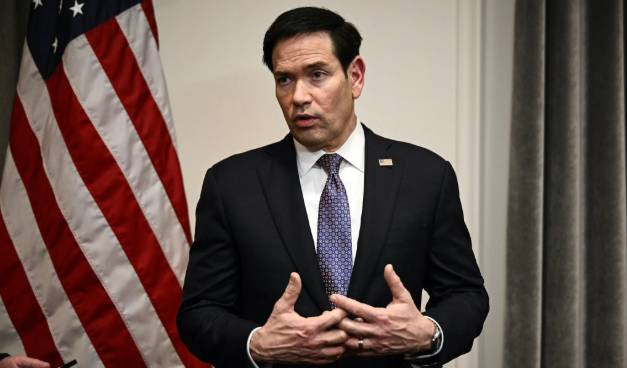
US Secretary of State Marco Rubio has rejected Iran’s demand for financial compensation over damage caused by the ongoing war, saying Washington will not pay reparations as part of a potential agreement to end the conflict.
Speaking to reporters after a G7 foreign ministers’ meeting in Paris on Tuesday, Rubio dismissed Tehran’s financial demands and said President Donald Trump had already made clear that the United States would not agree to such payments.
“They’re demanding pallets of cash, which the president made clear is not going to happen,” Rubio said.
His remarks highlight one of the major obstacles facing diplomatic efforts to reach a settlement between Washington and Tehran. Iran has called for compensation for the destruction caused by months of US-Israeli military operations, alongside demands for sanctions relief and the removal of restrictions affecting its economy.
Rubio Says US Sanctions Are Putting Pressure on Iran
Rubio also argued that the Trump administration did not need to restart large-scale military operations against Iran because economic pressure was already imposing significant costs.
According to the secretary of state, US sanctions and the naval blockade were placing considerable strain on Iran’s economy. He indicated that Washington could continue using these measures while diplomatic discussions remained underway.
His comments came a day after Trump said there was “positive momentum for a deal” aimed at reopening the Strait of Hormuz and addressing concerns surrounding Iran’s nuclear program.
Following a White House meeting with Qatari Prime Minister Sheikh Mohammed bin Abdulrahman Al Thani on Monday, Trump described the war, which began in late February, as “effectively over.”
Qatar and several other regional governments have encouraged the US administration to avoid renewed military strikes and pursue a diplomatic solution instead.
Iran Demands Compensation, Sanctions Relief and Frozen Assets
Iran has outlined several conditions for a potential agreement with the United States. These include an end to the US naval blockade, the lifting of economic sanctions, access to billions of dollars in frozen Iranian assets, and compensation for damage caused during the conflict.
In April, the Iranian government estimated that the country had suffered at least $270 billion in direct and indirect economic damage since the war began. The reported figure represents a substantial portion of Iran’s economy.
Rubio rejected Tehran’s position, arguing that Iran should be responsible for compensation because of its role in regional instability.
“We’re not going to pay,” the secretary of state said, adding that Iran should be the side paying reparations rather than receiving them.
The disagreement over compensation could complicate negotiations, particularly as both governments attempt to establish the financial and security terms of a possible settlement.
Previous US-Iran Understanding Offers a Different Approach
A memorandum of understanding reached between Washington and Tehran in June did not explicitly require the United States to compensate Iran.
Instead, the proposed framework outlined possible economic relief measures, including easing restrictions on Iranian oil exports, releasing frozen assets once the agreement was implemented, and removing broader sanctions as part of a final settlement.
The distinction between releasing Iran’s own frozen money and providing new compensation is politically important for the Trump administration.
Iranian assets have been restricted under US sanctions and related financial measures. Estimates suggest that Tehran has more than $100 billion held in accounts across several countries, including India, Qatar, Iraq, and Japan.
Much of the money accumulated in overseas accounts after Trump withdrew the United States from the 2015 nuclear agreement in 2018 and restored sweeping sanctions against Iran.
Obama-Era Cash Payment Remains a Political Flashpoint
Any agreement involving the transfer or release of money to Iran could create political difficulties for Trump and Rubio.
Both have previously criticized former President Barack Obama’s administration over a $1.7 billion payment made to Iran in 2016. Part of the payment was reportedly transported to Tehran on wooden pallets, an image that became a major political talking point in Washington.
The Obama administration maintained that the payment settled a decades-old dispute involving military equipment Iran had purchased but never received.
However, the timing of the transaction, which coincided with the release of four detained Americans, led critics to argue that the payment amounted to a concession in negotiations.
The historical dispute continues to influence the political debate over how much financial relief Washington should offer Tehran in any new agreement.