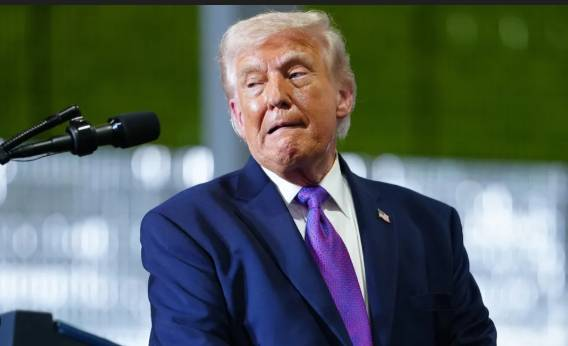


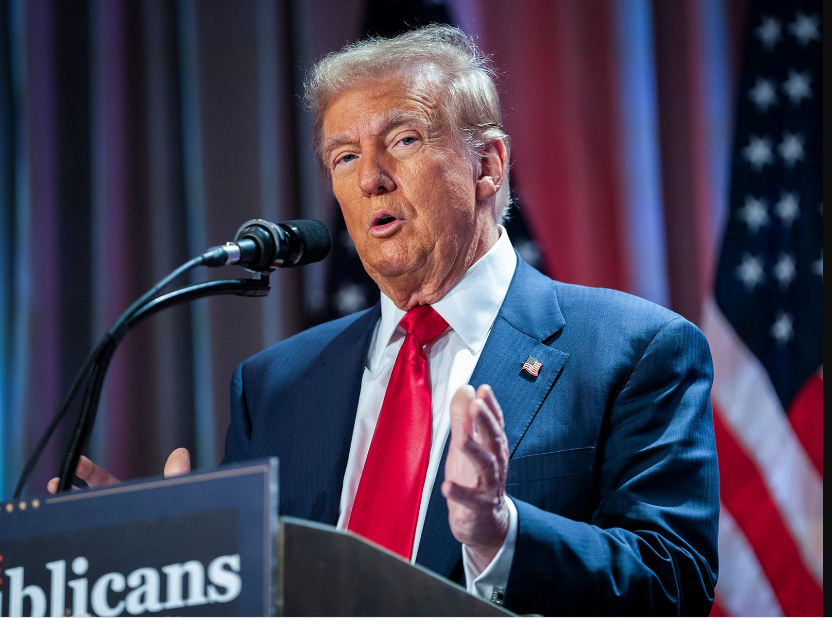
WASHINGTON: President Donald Trump on Friday said he is prepared to help broker a ceasefire agreement between Pakistan and Afghanistan, calling it “an easy one for me to solve.”
Speaking to reporters at the White House, Trump said his administration has successfully de-escalated multiple global conflicts in recent months, highlighting his mediation efforts in Pakistan-India tensions and his Gaza peace initiative.
“I’ve helped prevent eight conflicts around the world in just eight months,” Trump said. “The Prime Minister of Pakistan said I saved millions of lives when I stepped in during the Pakistan-India situation. That would’ve been a bad one — two nuclear nations, right?”
The remarks came as Pakistan and Afghanistan agreed to extend their temporary 48-hour ceasefire to allow continued peace talks in Doha, according to Reuters, citing diplomatic sources from both countries.
Officials said the truce, initially arranged on Wednesday after days of deadly border clashes, paused hostilities that killed dozens and injured hundreds. The ceasefire has been extended at Kabul’s request, with negotiations expected to focus on preventing future skirmishes and addressing Pakistan’s concerns about militant sanctuaries inside Afghanistan.
A Pakistani delegation is set to arrive in Doha on Saturday for discussions with Afghan Taliban representatives, while security officials from both sides prepare confidence-building measures.
Pakistan’s Foreign Office spokesperson, Shafqat Ali Khan, confirmed on Friday that Islamabad is committed to a peaceful resolution through dialogue. “Pakistan and Afghanistan are working together to address this complex yet solvable issue constructively,” Khan said during a press briefing in Islamabad.
He added that Pakistan expects “concrete and verifiable actions” from the Taliban government against militant groups such as Tehreek-e-Taliban Pakistan (TTP) and India-backed Baloch insurgents. “We want a stable and peaceful Afghanistan, but we also expect them to act against terrorist networks operating from their soil,” Khan emphasized.
The latest hostilities mark one of the most serious military escalations between the neighbors since the Taliban regained power in 2021. The violence erupted after Afghan forces reportedly launched an unprovoked attack on Pakistani border posts in early August, killing 23 soldiers. Pakistan retaliated with what it described as “precision strikes” on militant positions in Kandahar and Kabul, killing over 200 fighters, according to intelligence reports.
Prime Minister Shehbaz Sharif reiterated that Pakistan remains open to dialogue but insisted that Kabul must first meet Islamabad’s “justified conditions.” Speaking at a cabinet meeting on Thursday, he said, “The message has been sent — if they want to meet our conditions through talks, we are ready. The ball is in their court.”
Afghan officials, however, accused Pakistan of violating airspace and conducting airstrikes near Paktika province, a claim Islamabad has not publicly confirmed. The Pakistani military spokesperson, Lt. Gen. Ahmed Sharif Chaudhry, maintained that the country reserves the right to defend its borders. “Afghanistan is being used as a base for terrorism in Pakistan, and we have evidence to prove it,” he said in Peshawar.
Regional analysts believe Trump’s renewed interest in South Asian diplomacy could influence U.S. involvement in Pakistan-Afghanistan peace efforts, especially if tensions escalate further or impact regional counterterrorism operations.