






US President Donald Trump has reportedly ordered the American military to prepare a new wave of strikes against Iran, raising fears of a major escalation in the ongoing conflict between Washington and Tehran.
According to The Wall Street Journal, which cited unnamed US officials, the planned military campaign could begin as early as this weekend and may continue for several days. The reported strikes are intended to increase pressure on Iran and push Tehran back toward negotiations over its nuclear programme.
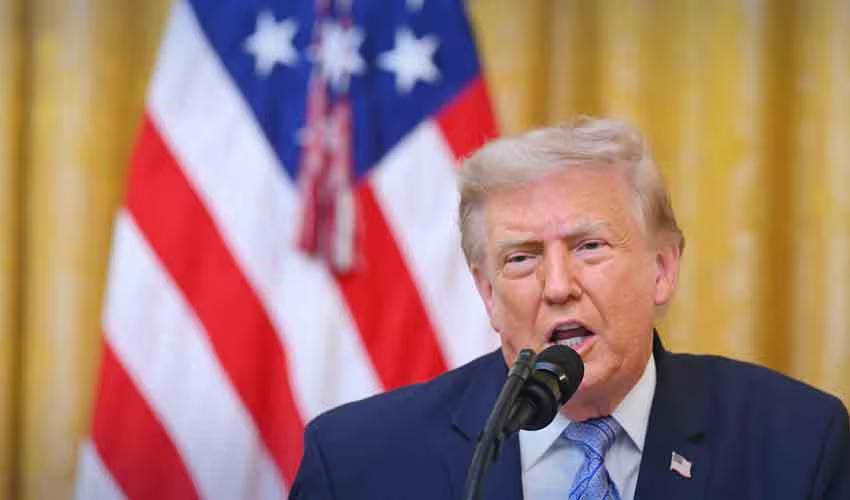
Trump signaled that further action was likely during a Cabinet meeting at the presidential retreat in Camp David, Maryland.
“We’ll be hitting them very hard,” Trump told reporters, warning that Iran’s leadership would eventually be forced to reconsider its position under continued pressure.
The US president said American operations would continue until Iran agrees to abandon its nuclear ambitions, arguing that sustained military pressure could weaken Tehran’s ability to continue its current policies.
Trump Expresses Doubts Over Iran Negotiations
While Trump said a diplomatic solution with Iran remains possible, he expressed growing frustration with Tehran’s approach.
“I’m losing faith in them because they do lie and do misrepresent,” Trump said, while adding that an agreement could still be reached if Iran takes what he described as meaningful steps.
The president also claimed that the United States currently holds a stronger position in the conflict and that Iran is facing increasing difficulties.
The latest reported plans follow an Iranian attack on US troops stationed in Jordan and a subsequent American response targeting Iran-backed groups.
Possible Targets Include Energy Infrastructure
Reports from US media outlets suggest that Washington is considering expanding the campaign beyond military facilities.
According to The Wall Street Journal and other reports, possible targets could include Iranian energy infrastructure, including oil facilities, refineries, and power plants.
A report by CBS News said strikes on energy sites would represent a significant escalation because such facilities are closely linked to Iran’s economy.
The possibility of Israeli involvement has also raised concerns, with reports suggesting that Israel could participate in future operations after a period of reduced military activity.
Analysts warn that attacks on major infrastructure could trigger a wider regional response, including missile attacks against Israel and US interests across the Middle East.
White House and Pentagon Avoid Confirming Strikes
The Pentagon declined to comment directly on reports of possible attacks, saying it does not discuss potential targets before presidential decisions are finalized.
A Defence Department spokesperson said US forces remain prepared to act if ordered by the president.
White House Press Secretary Karoline Leavitt also avoided confirming whether a new military operation was imminent.
However, she said Iran would continue facing pressure until it engages in what Trump considers serious negotiations.
She added that the administration remains committed to preventing Iran from obtaining nuclear weapons.
Iran Threatens Major Regional Response
Iran has responded with strong warnings, saying any new US military action would trigger a significant retaliation.
The Islamic Revolutionary Guard Corps (IRGC) said Tehran has prepared response plans targeting US and Israeli interests across the region.
A senior Iranian security official described possible US attacks on Iranian infrastructure as a dangerous move and warned that retaliation could include strikes against energy facilities and strategic locations.
Iranian officials said American military bases in Gulf countries and Israeli infrastructure could become targets if new attacks are launched.
Strait of Hormuz Tensions Increase
Iran also warned that further military escalation could lead to tighter restrictions around the Strait of Hormuz, one of the world’s most important energy shipping routes.
Iranian officials said disruptions to maritime traffic could affect global trade and energy markets.
The United States has continued naval operations in the region, with US Central Command reporting enforcement measures around Iranian ports.
The situation has raised concerns among international energy markets, with oil prices increasing after reports that Washington was considering strikes against Iranian energy facilities.
Global Markets Watch Iran Conflict
Oil markets reacted quickly to the possibility of expanded military operations.
US benchmark West Texas Intermediate (WTI) crude prices climbed above $86 per barrel following reports that Iranian oil and power facilities could become potential targets.
The conflict has already created major regional instability, affecting energy shipments, trade routes, and security conditions across the Middle East.
The latest escalation comes as Washington and Tehran remain divided over Iran’s nuclear programme, regional influence, and future diplomatic negotiations.
With both sides issuing strong warnings, international observers are closely watching whether the situation moves toward further military confrontation or a renewed diplomatic effort.