
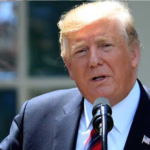
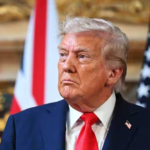
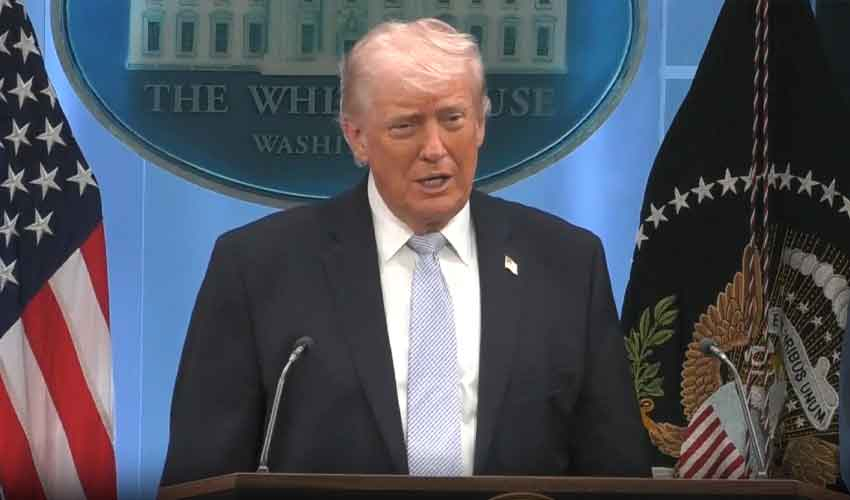
Washington / Islamabad – US President Donald Trump has indicated that a new round of high-stakes negotiations with Iran could take place in Pakistan within the next two days, signaling a rapid acceleration in diplomatic efforts aimed at ending the ongoing conflict.
Speaking in an interview with the New York Post, Trump suggested that Islamabad is emerging as a key venue for the second phase of US-Iran talks, questioning the logic of holding negotiations in locations “not directly connected” to the dispute.
Islamabad Emerging as Key Diplomatic Hub
According to Trump, discussions with Tehran could resume very soon, possibly within 48 hours, with Pakistan positioned as a central mediator.
He also praised Pakistan’s military leadership, saying Field Marshal Asim Munir was “performing well” in his role amid growing regional diplomatic activity.
Trump further hinted at the possibility of revisiting Islamabad himself, adding that ongoing diplomatic contact between the two sides is continuing, though progress remains slow and sensitive.
Ceasefire Pressure Builds Ahead of Deadline
The renewed diplomatic momentum comes as a fragile two-week ceasefire—announced on April 7—nears expiration. Sources familiar with the talks say both the United States and Iran have agreed in principle to continue negotiations before the deadline passes.
Reports suggest that the next round of discussions could take place before April 21, with Islamabad, Geneva, Istanbul, and Cairo all being considered as possible venues. However, multiple diplomatic sources now point to Pakistan as the leading candidate.
Pakistan’s Role in US-Iran Negotiations Expands
According to reports from Bloomberg and the Associated Press, Pakistan is increasingly being viewed as a neutral and strategically important location for indirect and direct talks between Washington and Tehran.
Prime Minister Shehbaz Sharif has acknowledged ongoing diplomatic efforts, stating that Islamabad is actively working to bridge differences between the two sides and support a peaceful resolution.
The first round of talks held in Islamabad reportedly lasted more than 20 hours, marking the most significant direct engagement between the US and Iran in decades. While no formal breakthrough was achieved, both sides agreed to keep diplomatic channels open.
Trump Signals Possible Visit to Pakistan
Trump also suggested that Iran has shown renewed interest in reaching an agreement, claiming that “the right people” had contacted Washington to restart discussions.
“We’ve been called this morning by the right people… and they want to work a deal,” Trump told reporters, without providing further details.
In a separate development, Republican figure Sajid Tarar stated that discussions are underway in Washington regarding a possible presidential visit by Trump to Pakistan. If finalized, the visit could coincide with the concluding phase of negotiations, potentially leading to what some officials are calling an “Islamabad agreement.”
High-Stakes Diplomacy Continues Behind Closed Doors
Diplomatic sources indicate that both Washington and Tehran are exploring multiple backchannel communications while preparing for the next formal round of talks. The urgency is driven by the approaching ceasefire deadline and rising regional instability.
Officials familiar with the discussions describe the situation as “fluid but promising,” with Pakistan increasingly positioned at the center of one of the most significant diplomatic processes in recent years.