
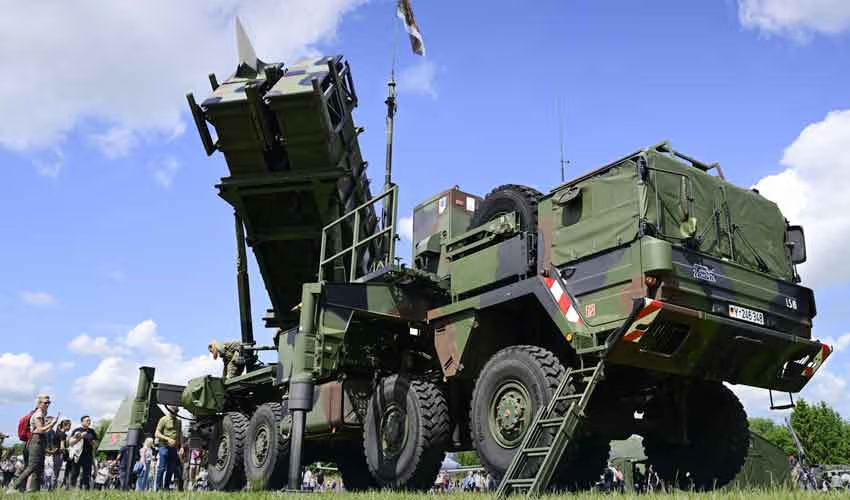
The United States has reportedly moved a Patriot air and missile defence system from Texas to Israel as Washington and Tel Aviv prepare for the possibility of renewed military confrontation with Iran.
The reported deployment is part of a wider regional military buildup involving cargo aircraft, personnel movements and efforts to replenish weapons supplies. However, US President Donald Trump has not made a final decision on whether to authorise another round of attacks against Tehran.
Israeli public broadcaster KAN reported that 10 US military cargo aircraft landed at Ovda and Nevatim air bases in southern Israel on Thursday after departing from Fort Bliss in Texas. Additional American military aircraft were reportedly sent to bases in Jordan, Saudi Arabia and Qatar.
The Times of Israel also reported that more than 10 US transport aircraft had arrived at Israeli air bases during the preceding week, citing analysts monitoring publicly available flight-tracking data. Several flights reportedly originated from Biggs Army Airfield at Fort Bliss.
At least three C-17 transport flights from Biggs Army Airfield to Ovda were identified in recent tracking data. However, publicly available flight information does not establish what equipment or supplies the aircraft carried.
Neither the US government nor the Israeli military had publicly confirmed the reported cargo deliveries or disclosed their contents.
Patriot Missile Defence System Reportedly Transferred From Texas
A separate report by The Wall Street Journal said the US military was transferring a Patriot air and missile defence system from Texas to Israel to strengthen regional protection ahead of a possible escalation with Iran.
The Patriot system is designed to detect, track and intercept incoming aerial threats, including certain ballistic and cruise missiles. Its components include radar equipment, launchers, interceptor missiles and an engagement control station.
Fort Bliss, where the reported transfer originated, is home to the US Army’s 32nd Army Air and Missile Defense Command, which oversees air-defence operations and related units.
Reports have differed over the exact destination and purpose of the Patriot deployment, with some describing it as part of a broader effort to reinforce air defences across the Middle East.
US Central Command did not directly confirm the reported movement, citing operational security. A command official said American forces regularly reposition military assets to support their assigned missions.
The reported Patriot transfer should be distinguished from the separate cargo aircraft arrivals. There is no public confirmation that the 10 aircraft identified in the reports transported the missile defence system.
Washington Warns Gulf States About Possible Iran Campaign
The reported military movements come after The Wall Street Journal said Washington had warned several Gulf Arab countries to prepare for a possible short but intense military campaign against Iran following the November 3 US midterm elections.
According to the report, the warnings were communicated through diplomatic and military channels as American officials considered options for renewed operations.
US forces have reportedly been relocating personnel away from installations considered vulnerable to Iranian retaliation. The military is also said to be replenishing ammunition stocks and preparing additional aircraft for possible missions.
Earlier reports indicated that an aircraft carrier strike group and a Marine Expeditionary Unit could arrive in the Middle East in November, joining American naval forces already operating in the region.
The United States has also reportedly strengthened air-defence arrangements in Saudi Arabia and Qatar, with additional systems intended to protect important energy infrastructure.
These preparations have raised concerns among regional governments about the possibility that renewed US-Israeli attacks could trigger a wider confrontation.
Trump Considers Possible Strikes on Iranian Infrastructure
Trump is reportedly weighing military options that could include strikes against Iranian infrastructure and nuclear facilities. However, no final authorisation for a new offensive has been publicly announced.
The White House declined to comment on what it described as sensitive military plans that may or may not exist. It said the president was keeping all options available to prevent Iran from acquiring nuclear weapons.
A separate Wall Street Journal report said US Central Command chief General Brad Cooper had briefed Trump on potential military options during discussions involving senior defence and military officials.
Diplomatic efforts remain another possible path. However, negotiations have struggled to overcome disagreements over Iran’s nuclear programme and the conditions required for a settlement.
According to the supplied report, Iran rejected a Qatari draft proposal on Sunday. An Iranian official cited by Reuters reportedly described the proposals as unacceptable and said Tehran would not compromise on the nuclear issue.
The competing diplomatic and military developments leave the next steps uncertain, with Washington continuing to consider its options while regional mediators seek to prevent another escalation.
US and Israel Coordinate Military Preparations
An Israeli official told KAN that Washington and Tel Aviv were maintaining close coordination over possible military developments.
The official said both countries were preparing for different scenarios, although no final decision had been made about launching another operation.
The reported coordination comes as the two allies assess Iran’s military capabilities and the potential consequences of renewed attacks.
Meanwhile, Democratic US Senator Chris Murphy said he and other senators had received a briefing about possible plans for military action against Iran. Murphy criticised the proposals, describing them as “insane” and warning that another operation could lead to a serious escalation.
His comments reflect concerns among some US lawmakers about the potential consequences of renewed military involvement, including the risk of a wider regional conflict.
Iran Warns of Retaliation Against Gulf Infrastructure
Iran has warned that renewed American and Israeli attacks could lead to retaliation against targets across the Persian Gulf.
Potential targets mentioned in the supplied reports include energy facilities, airports, pipelines and other infrastructure. Iranian officials have also warned that a wider confrontation could disrupt international markets, particularly the global gas trade.
Foreign Minister Abbas Araghchi has warned about the economic consequences of military escalation in the Gulf, where energy production and shipping routes are closely connected to international supply chains.
Iranian security chief Mohsen Rezaei has also reportedly threatened infrastructure linked to American interests, including data centres.
Other reports cited in the supplied material said Tehran had urged Hezbollah to increase its readiness amid concerns about another round of fighting. These claims have not been independently established here.
Any retaliation involving energy facilities or commercial infrastructure could affect neighbouring countries and create further uncertainty for international shipping and fuel markets.
Patriot and THAAD Systems Remain Important to Israel’s Defence
The reported deployment highlights the importance of American air-defence support to Israel amid continuing concerns about Iranian missiles and drones.
The Patriot system is designed to counter a range of aerial threats, while the Terminal High Altitude Area Defence system, commonly known as THAAD, is intended to intercept ballistic missiles at higher altitudes.
At least one THAAD battery has been deployed in Israel since October 2024. Israel also operates its own air-defence systems, including Iron Dome, which is designed to intercept shorter-range rockets and other incoming threats.
CNN previously reported that Israel had delayed further strikes against Iran partly because of the need for additional US missile-defence support, with defensive ammunition under pressure during the conflict.
The United States and Israel launched attacks against Iran on February 28, according to the supplied account. Tehran responded with attacks against Israel and US-linked targets across the region. The material also describes a ceasefire agreement in April and a subsequent June memorandum concerning freedom of navigation through the Strait of Hormuz.
However, disagreements over security arrangements and implementation have reportedly prevented a lasting settlement.
The latest reported movement of American aircraft and air-defence equipment has renewed questions about whether Washington and Israel are preparing for another military campaign. For now, the scale and timing of any potential operation remain uncertain, and neither government has publicly confirmed a decision to launch fresh strikes against Iran.