

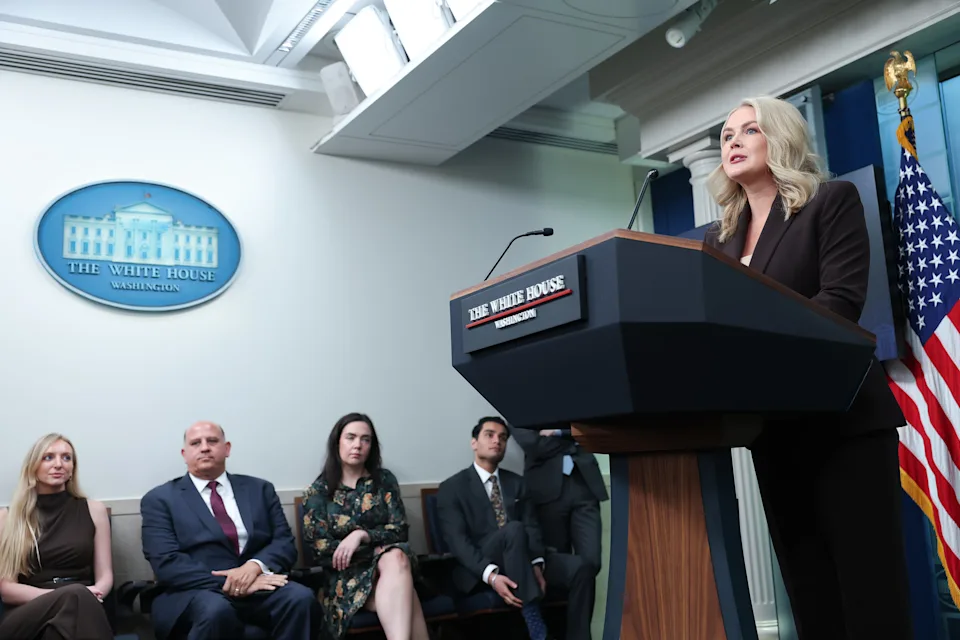
The White House has implemented new security measures restricting journalists’ access to several key West Wing offices, including those of Press Secretary Karoline Leavitt and her senior aides — a decision that has sparked widespread concern over transparency and press freedom.
According to a National Security Council (NSC) memorandum circulated Friday, members of the press will no longer be allowed to enter Room 140 — known as “Upper Press” — without prior appointments. The memo cited the need to “protect sensitive material” now handled by White House communications officials following a recent restructuring.
“In order to protect such material, and maintain coordination between National Security Council staff and White House communications staff, members of the press are no longer permitted to access Room 140 without prior approval,” the directive stated.
Access Now by Appointment Only
The change, effective immediately, limits access to an area located just steps from the Oval Office, where reporters have traditionally interacted with top officials in real time to seek clarification, quotes, or updates.
Previously, accredited journalists could freely approach Leavitt, her deputy Steven Cheung, and other senior communications aides — a practice that had long been a defining feature of White House press reporting.
Cheung defended the move on X (formerly Twitter), alleging several incidents of misconduct by reporters.
“Some reporters have been caught secretly recording video and audio of our offices, along with pictures of sensitive info, without permission,” he wrote. “Others have wandered into restricted areas or eavesdropped on private meetings.”
Cheung added that cabinet members and staff had been “ambushed” by journalists waiting outside offices for unscheduled questioning.
Journalists Condemn the Decision
The White House Correspondents’ Association (WHCA) swiftly condemned the move, calling it a serious blow to transparency and accountability.
“The White House Correspondents’ Association unequivocally opposes any effort to limit journalists from areas within the communications operations of the White House that have long been open for newsgathering,” said Weijia Jiang, WHCA president. “Access to the press secretary’s office is essential for transparency and accountability.”
Journalists will still have access to a designated workspace located elsewhere in the White House complex, though that area houses lower-level staff and provides limited direct interaction with senior officials.
Press freedom advocates argue that the restrictions undermine the longstanding tradition of open access between the executive branch and the press — a cornerstone of democratic oversight.
Part of a Broader Trend of Media Restrictions
The decision follows a similar policy recently enacted at the Department of Defense, where journalists were forced to vacate Pentagon offices after refusing to sign new media access agreements that granted the department authority to revoke credentials for those deemed “security risks.”
At least 30 major outlets, including Reuters, the Associated Press, and Bloomberg News, rejected the Pentagon’s new terms, warning that the policy threatened independent journalism and could limit coverage of defense matters.
The new White House policy also echoes moments from past administrations. In 1993, President Bill Clinton briefly restricted media access to West Wing offices, only to reverse the decision amid public backlash. Similarly, earlier this year, Trump’s administration faced criticism for removing several outlets from the permanent press pool, further fueling concerns about media suppression.
Growing Alarm Among Press Freedom Advocates
Critics say the cumulative effect of these restrictions suggests an ongoing effort to control narratives and limit scrutiny of government operations.
“When journalists can’t freely question officials in the nation’s most powerful building,” one senior White House correspondent told Reuters, “the public loses its right to know.”
Press freedom organizations, including the Committee to Protect Journalists (CPJ) and Reporters Without Borders, have called on the administration to reverse the new policy, warning that it could set a dangerous precedent for press access in future administrations.
As the White House defends its actions as a “security necessity,” observers note that the battle over transparency versus control may once again define the evolving relationship between the U.S. government and the free press.