
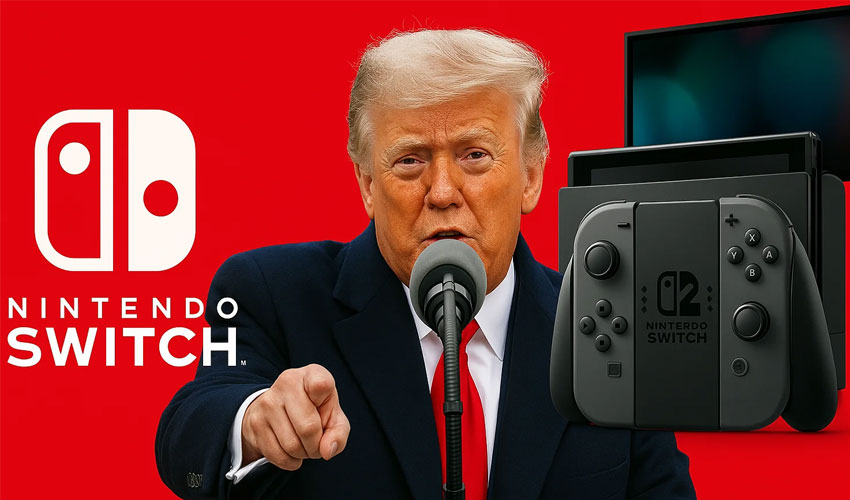
Nintendo of America has filed a lawsuit against the United States Government, seeking refunds on tariffs imposed during the Trump administration that the company claims disrupted the rollout of its new Nintendo Switch 2 console.
The case, filed in the U.S. Court of International Trade, asks the court to order the refund of tariff payments, along with interest and attorney fees. Nintendo argues that the tariffs, introduced under the International Emergency Economic Powers Act of 1977, were unlawful and caused substantial financial harm.
Impact on Switch 2 Launch
Nintendo says the tariffs created significant uncertainty at a critical time, delaying pre-orders for the Nintendo Switch 2 while the company evaluated the potential financial impact. Despite these challenges, the console eventually launched with a $449.99 price tag, though prices for several accessories were increased due to added costs from the tariffs.
During the initial rollout, Nintendo and other tech firms cited “evolving market conditions” when explaining shipping delays and pricing adjustments, avoiding direct criticism of the tariffs. However, a recent Supreme Court ruling striking down Trump-era tariffs has prompted companies to speak more openly about the financial consequences.
Widespread Corporate Challenges
Nintendo is not alone in seeking relief. More than 1,000 companies, including FedEx and Costco, are pursuing refunds for tariffs imposed during the previous administration. Many technology companies faced increased import costs, prompting price hikes on products ranging from laptops to gaming consoles, with some firms reportedly incurring tariff bills exceeding $1 billion per quarter.
Legal Targets
The lawsuit, titled Nintendo of America Inc. v. United States of America, names multiple U.S. government agencies as defendants, including:
- U.S. Customs and Border Protection
- U.S. Department of the Treasury
- U.S. Department of Commerce
The case also mentions former Trump administration officials, including Kristi Noem, formerly Secretary of the Department of Homeland Security.
Nintendo’s filing seeks prompt refund of duties paid and any other remedies the court deems appropriate, highlighting the ongoing financial burden companies faced due to the tariffs.
Broader Implications for Trade Policy
The Trump-era tariffs had widespread effects across the technology sector, forcing companies to adjust pricing strategies and supply chain plans. Following the Supreme Court ruling, Trump announced a new 10% global tariff rate, with the possibility of increasing it to 15% in the future, signaling continued uncertainty for U.S. importers and manufacturers.
The Nintendo lawsuit underscores how trade policies directly affect global technology companies and consumer markets, with the Switch 2 launch serving as a high-profile example of the tariffs’ economic impact.