
Trump Pushes Hardline Message on Iran Negotiations
US President Donald Trump has stated that Iran’s leadership is “strong” but ultimately has “no choice” except to reach a diplomatic agreement with Washington as the ongoing conflict enters a prolonged and volatile phase.
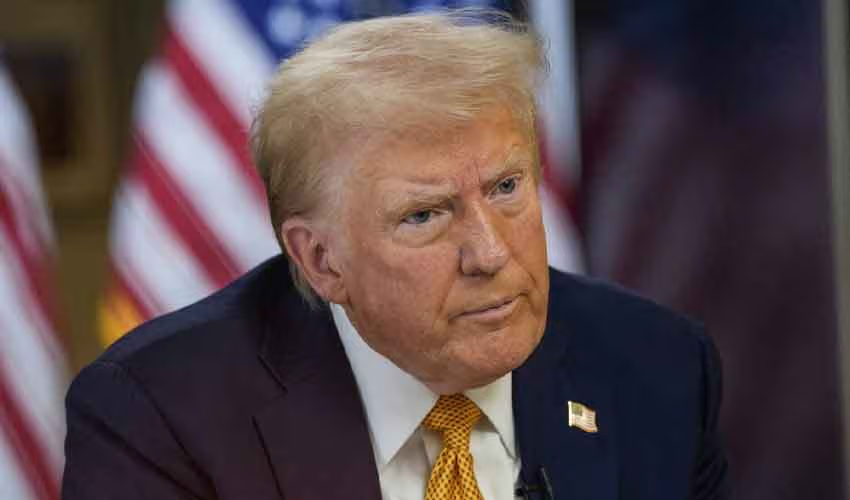
In an interview with NBC News’ Meet the Press during a stop in Chippewa Falls, Wisconsin, Trump emphasized that negotiations with Iran are still developing and will not be resolved quickly. He described the war as being in its early stages compared to historical conflicts, while insisting his administration is making rapid progress behind the scenes.
“They’re strong, they’re proud… there are things they never thought they’d be doing,” Trump said, suggesting Tehran will eventually be forced to accept terms it had previously rejected.
Comparison to Vietnam War and Political Pushback
Trump rejected criticism calling for immediate results in the conflict, arguing that the Iran situation is still relatively new compared to past US wars.
He compared it directly to Vietnam, saying, “You know, Vietnam lasted 19 years,” while noting that critics are unfairly rushing judgment on his administration’s performance just months into the confrontation.
The president also remarked that political bias influences public expectations, claiming that Democrats would not face the same scrutiny in a similar scenario.
US Claims Major Damage to Iran’s Military Capacity
Trump asserted that US operations have significantly reduced Iran’s battlefield strength, particularly targeting drone production and missile infrastructure.
According to his remarks, many Iranian military facilities—including drone factories and missile launch sites—have been “knocked out,” although he acknowledged that Iran still retains operational weapons.
“They have some missiles, they have some drones,” he said, estimating that Iran may still possess roughly 21%–22% of its original missile stockpile.
Despite the damage claims, independent verification of the extent of destruction has not been publicly confirmed, and Iran continues to demonstrate operational capability in various regions.
Air Force One Remarks: “Big Success” in Talks
While speaking to reporters aboard Air Force One, Trump described ongoing diplomatic engagement with Iran as productive, stating that Washington is achieving “big success” and “great progress.”
He reiterated a firm red line in negotiations: Iran must not be allowed to obtain nuclear weapons under any circumstances.
“Iran will not have nuclear weapons,” he said, stressing that Tehran is currently not in a position to advance its nuclear ambitions.
Oil Flow Continues Through Strait of Hormuz
A key point in Trump’s comments was the continued movement of oil shipments through the Strait of Hormuz, a critical global energy chokepoint.
He noted that earlier fears of oil prices spiking to $300 per barrel had not materialized, citing stable tanker traffic as evidence that global supply lines remain intact.
Trump said oil prices are currently hovering near $96 per barrel, signaling relative market stability despite ongoing geopolitical tensions in the Gulf region.
The Strait of Hormuz remains one of the world’s most sensitive maritime routes, with a significant percentage of global oil exports passing through its narrow waters daily.
Ceasefire Holds, but Regional Strikes Continue
A ceasefire agreement between Washington and Tehran, initially reached in April, has been extended multiple times. However, tensions escalated again this week following renewed exchanges of strikes near the Strait of Hormuz region.
Iran has also demonstrated ongoing missile and drone capabilities through attacks across the Persian Gulf, including an incident involving strikes near Kuwait International Airport, raising fresh concerns about regional security risks.
Military analysts warn that despite diplomatic engagement, both sides continue to maintain active operational readiness, keeping the situation highly unstable.
Negotiations Continue Amid High Stakes
While Trump has expressed confidence in diplomatic momentum and claimed substantial military setbacks for Iran, the broader conflict remains unresolved. Iran retains missile capacity, drone capabilities, and the ability to conduct regional strikes, while the US continues to push for a long-term nuclear and security agreement.
The evolving situation reflects a complex balance of pressure, diplomacy, and military posturing, with both sides signaling that negotiations are ongoing but far from final.