
Washington Signals Momentum in US–Iran Nuclear Negotiations
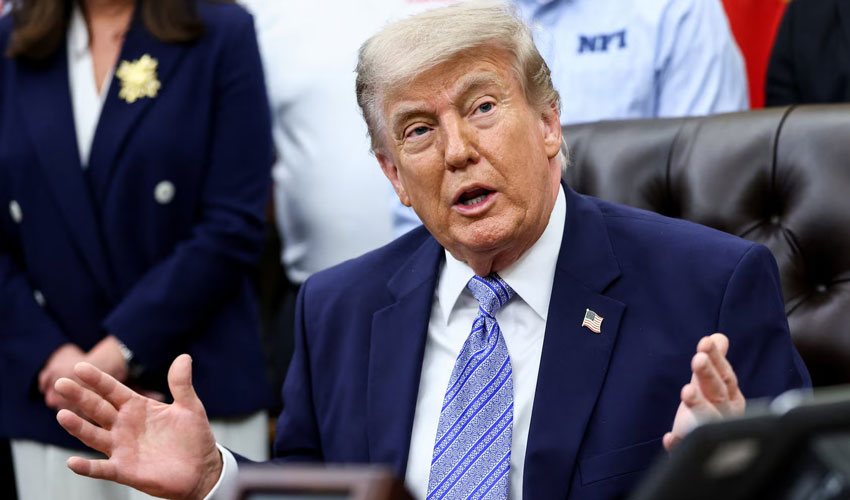
US President Donald Trump has expressed renewed confidence that a US–Iran nuclear agreement may be near, telling reporters that negotiations with Tehran are showing “very strong progress” and could produce meaningful developments within days.
Speaking in a series of media interactions on Wednesday, Trump suggested that talks were moving faster than expected, even hinting that a deal could emerge “over the weekend,” though he acknowledged that timing remained uncertain.
“The negotiation itself is going very well actually,” Trump said, adding that he expected “some progress by the end of the week.”
Despite his optimism, Iranian officials continue to deny that any final breakthrough has been reached, maintaining that discussions are still ongoing and complex.
Nuclear Program at the Center of High-Stakes Talks
A key sticking point remains Iran’s nuclear enrichment program, particularly its stockpile of highly enriched uranium.
Trump reiterated his long-standing position that Iran must never obtain nuclear weapons, insisting that any final agreement would require strict limitations and removal of sensitive nuclear material.
“We will get Iran’s stockpile of highly enriched uranium,” Trump said, emphasizing Washington’s firm stance on non-proliferation.
Iran, however, continues to argue that its nuclear program is strictly peaceful and insists on its right to continue uranium enrichment under international guidelines.
The contrasting positions highlight why negotiations have remained fragile despite recent signs of diplomatic movement.
Supreme Leader’s Role and Possible High-Level Engagement
Trump also claimed that Iran’s Supreme Leader is directly involved in shaping the negotiations, suggesting that senior-level engagement is increasing as discussions progress.
He even floated the possibility of a future meeting involving Supreme Leader Ayatollah Ali Khamenei or his son Mojtaba Khamenei, though no formal diplomatic arrangement has been confirmed.
These remarks come as global observers note renewed diplomatic activity aimed at reducing tensions across the Middle East after months of regional instability.
Lebanon Conflict and Israel–Iran Tensions in the Background
Beyond nuclear issues, Trump addressed the broader regional conflict involving Israel and Lebanon, saying he preferred to keep those discussions separate from Iran negotiations.
“I’d like to separate it because it is separate,” he said, referring to overlapping diplomatic challenges.
Shortly before his remarks, Washington announced a renewed ceasefire framework between Israel and Lebanon, including pilot security zones designed to limit militant activity and stabilize border regions.
However, Iranian officials maintain that regional conflicts, particularly those involving Hezbollah, remain closely tied to broader US–Iran tensions.
Claims of Direct Intervention in Israel Operations
Trump also revealed that he had personally intervened in Israeli military decisions in Lebanon, stating that he urged Prime Minister Benjamin Netanyahu to halt further strikes.
He said both Israel and Hezbollah had provided assurances to avoid escalating attacks, though independent confirmation of such coordination has not been publicly detailed.
“Israel is our great partner,” Trump said, reinforcing Washington’s strategic alliance with Tel Aviv while highlighting efforts to reduce regional escalation.
Strait of Hormuz and Global Energy Security Concerns
Trump further linked a potential agreement with Iran to improved stability in global shipping lanes, particularly the Strait of Hormuz, one of the world’s most critical energy transit routes.
He argued that a successful deal could help reopen and stabilize the waterway, reducing risks to global oil supply chains that have been disrupted by regional tensions.
Analysts note that any easing of tensions in the Persian Gulf could have immediate effects on oil markets, shipping insurance costs, and inflation trends worldwide.
Criticism of Previous Nuclear Deal and Media Reports
Reiterating his long-standing criticism of the Obama-era nuclear agreement, Trump called it the “worst deal with Iran,” arguing that it failed to permanently prevent nuclear escalation.
He also accused US media outlets, including CNN, of misreporting details of the ongoing negotiations.
At the same time, reports suggest internal discussions in Washington include concerns about any potential agreement involving direct financial assistance to Iran, which Trump is reportedly unwilling to support.
Diplomatic Signals Despite Continued Uncertainty
While Trump’s comments reflect growing optimism in Washington, Iranian officials continue to publicly downplay the likelihood of an imminent breakthrough.
Still, the tone of negotiations suggests increasing diplomatic activity at a sensitive moment for Middle East stability, energy markets, and global security policy, with both sides under pressure to avoid further escalation while protecting core strategic interests.