
Trump Signals Rapid Breakthrough in Iran Nuclear Negotiations
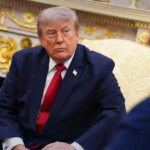
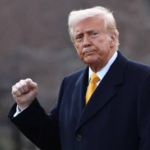
US President Donald Trump has expressed strong confidence that a nuclear-related agreement with Iran could be reached within days, saying negotiations are advancing faster than expected despite ongoing regional instability.
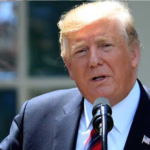
Speaking during media appearances and a virtual tele-rally, Trump said Tehran is prepared to make significant concessions, including abandoning any pursuit of nuclear weapons.
“We’re negotiating now and they want to make a very good deal,” Trump said, adding that Iran is “willing to give up” its nuclear ambitions entirely.
He reiterated Washington’s long-standing position that Iran must never obtain nuclear weapons under any circumstances.
“Two or Three Days” Timeline for Agreement
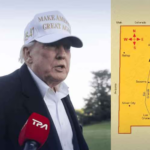
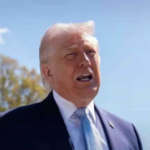
Trump told reporters that a framework for a deal could be completed within days, suggesting negotiations have reached a critical stage.
He also said that once an agreement is signed, restrictions affecting maritime routes—particularly the Strait of Hormuz—would be lifted immediately.
“The Strait will open up right away… maybe in two or three days,” he said, referring to the strategic shipping lane that plays a central role in global oil transport.
The comments came as markets continue to watch developments closely amid fears of supply disruptions in one of the world’s most important energy corridors.
Hormuz Pressure and Global Oil Market Impact
The Strait of Hormuz, a vital passage for global crude exports, has been under heightened attention due to rising tensions in the Gulf region.
Trump stated that current restrictions would remain until a formal agreement is reached but predicted a rapid normalization afterward.
He also forecast a sharp drop in oil prices once diplomatic progress is finalized, saying global markets would respond positively to stability returning to the region.
Economists have previously warned that any prolonged disruption in the Strait could trigger major fluctuations in global energy prices, especially for import-dependent economies.
Trump Predicts “Total Victory” Over Iran
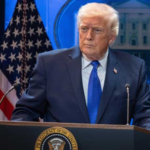
During remarks at a tele-rally supporting Republican Senator Lindsey Graham, Trump claimed the United States is approaching what he called “total victory” in its diplomatic and strategic pressure campaign against Iran.
He said the next two weeks would be decisive in shaping the outcome of the conflict and negotiations.
“We are winning that battle… it will be a total victory,” Trump said, framing the moment as a turning point in US–Iran relations.
He further claimed that American military actions have significantly weakened Iran’s defense capabilities, including its naval strength, though these assertions have not been independently verified.
Claims of Military Damage to Iran’s Capabilities
Trump said US operations have “decimated” Iranian military infrastructure, including leadership structures and naval assets.
He went as far as claiming Iran’s navy has been effectively eliminated, though no official confirmation from independent defense analysts supports those figures.
Despite the rhetoric, Iran continues to maintain operational military capacity across several regional theaters, and periodic exchanges of fire have continued in recent months.
Temporary Iran–Israel Pause After Escalation
Trump also stated that Iran and Israel have agreed to temporarily halt direct military action following recent escalations.
According to him, both sides accepted a short pause after back-and-forth strikes threatened to derail ongoing diplomatic efforts.
“They agreed through me to stop,” he said, adding that negotiations continued even during periods of heightened conflict.
The fragile ceasefire followed a series of incidents, including Israeli strikes in Lebanon and Iranian missile responses targeting northern Israel.
Ongoing Regional Flashpoints and Beirut Strike Fallout
Tensions escalated sharply after Israeli strikes on Hezbollah-linked targets in Beirut, which prompted Iranian missile launches toward Israeli territory.
In response, Israel carried out multiple air operations against Iranian-linked targets across the region.
Iran later announced a suspension of attacks but warned that any further escalation would trigger a strong response, underscoring the volatility of the current situation.
The cycle of retaliation has repeatedly tested fragile diplomatic efforts aimed at stabilizing the Middle East.
Trump Claims Diplomatic Pressure on Netanyahu
Trump said he personally urged Israeli Prime Minister Benjamin Netanyahu to avoid actions that could escalate the conflict further.
He claimed that several countries also encouraged him to pressure Israel into restraint during the latest round of tensions.
“I told Netanyahu that if he starts a war, he will be left alone,” Trump said, emphasizing Washington’s focus on keeping negotiations alive.
Despite tensions, Trump said his most recent conversation with Netanyahu remained constructive.
Vance Supports Negotiation Strategy
US Vice President JD Vance publicly backed the administration’s diplomatic approach, stating that the United States will continue pursuing a deal with Iran regardless of external opposition.
He said the agreement is being pursued in the interest of US national security and long-term regional stability.
Vance also suggested that while Israel’s position is important, it will not determine the direction of US negotiations.
Domestic Political Messaging and Endorsements
During his tele-rally appearance, Trump also used the platform to endorse Senator Lindsey Graham and South Carolina Lieutenant Governor Pamela Evette, praising their positions on national security, military policy, and conservative judicial appointments.
He described Graham as a “strong ally” and reaffirmed his support for Republican candidates aligned with his foreign policy approach.
US Helicopter Incident Near Strait of Hormuz
Trump also confirmed reports of a US military helicopter incident near the Strait of Hormuz, stating that the pilot was safe and in good condition.
The brief acknowledgment came amid heightened military vigilance in the region, where US forces remain deployed to monitor ongoing tensions and protect maritime routes.