

US Military Escalation After Helicopter Incident in Gulf Waters
The United States launched new military strikes on Iran on Tuesday after President Donald Trump confirmed that an American Apache helicopter was shot down near the Strait of Hormuz, escalating already fragile tensions across the region.
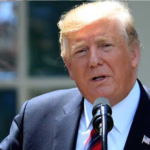
Trump described the response as “very strong” and “very powerful,” signaling a sharp escalation in US military posture following the incident.
“I believe the response should be very strong, very powerful, and that’s what this one is,” Trump told ABC News.
The strikes targeted areas around Iran’s southern coastline near the strategic waterway, a region already under intense geopolitical pressure due to ongoing conflict and disrupted maritime activity.
Explosions Reported Near Hormuz Strategic Zone
Iranian state media reported explosions on Qeshm Island and confirmed a projectile strike in the port city of Sirik, both located near the Strait of Hormuz.
Additional blasts were reported in Bandar Abbas, a key Iranian naval and commercial hub on the Gulf coast.
According to US military sources, the operation began around 5 p.m. ET and was described as a “proportional response to unjustified Iranian aggression.”
Officials also confirmed that multiple Iranian radar and air defense systems were targeted in the strikes, aiming to reduce future threats to US aircraft operating in the region.
Apache Helicopter Downed by Drone Attack
The escalation follows the downing of a US Apache helicopter, which officials say was hit by a one-way Iranian drone strike while operating near the coast of Oman.
A US defense official, speaking anonymously, said the aircraft was brought down during routine operations in international waters near the Strait of Hormuz.
The two pilots onboard were later rescued by a US Navy surface unit and are reported to be in stable condition.
Trump later downplayed the incident, telling The Wall Street Journal it “wasn’t a big deal,” though he emphasized that a strong response was necessary.
Iran Responds With Warning Over Foreign Forces
Iranian Foreign Minister Abbas Araghchi did not directly confirm involvement in the helicopter incident but warned that foreign military presence in the region increases the risk of “accidents or crossfire.”
He suggested that reducing foreign troop presence would be the best way to avoid further escalation.
Iranian state media later reported that no offensive operations had been conducted in the Strait of Hormuz in the past 24 hours, while warning of a “decisive response” if new attacks occur.
Rising Violence Across Multiple Fronts
The latest US-Iran escalation comes amid broader regional instability involving Israel, Lebanon, and Iran-backed groups.
Israeli forces recently struck the Lebanese port city of Tyre, killing at least eight people in what is described as the deadliest attack on the area since March.
In northern Israel, military clashes near the Lebanon border also resulted in casualties, highlighting the widening scope of conflict.
Analysts warn that overlapping conflicts in Lebanon, Iran, and maritime Gulf zones are increasing the risk of a multi-front regional war.
Trump’s Mixed Signals on Conflict Severity
While ordering strong retaliation, Trump also attempted to downplay the severity of the helicopter incident, calling it a contained event with no serious casualties.
A US Navy rescue team recovered the helicopter crew after the aircraft went down in waters near Oman during early morning patrol operations.
US Central Command confirmed the soldiers were in stable condition, offering a more cautious assessment than Trump’s public remarks.
Strait of Hormuz Becomes Global Flashpoint
The Strait of Hormuz, one of the world’s most important oil chokepoints, remains central to the crisis. Before the conflict intensified, nearly one-fifth of global crude oil and liquefied natural gas shipments passed through the waterway.
Despite ongoing tensions, US Energy Secretary Chris Wright said tanker traffic has recently improved, though he warned that a full return to normal shipping could take months after hostilities end.
Any disruption in the Strait continues to raise fears of global energy shocks and sharp oil price volatility.
Nuclear Deal Talks Under Pressure
Even as military action escalates, Trump maintains that negotiations with Iran remain possible and has repeatedly insisted that a nuclear agreement is still within reach.
However, tensions following recent strikes have raised serious doubts about diplomatic progress.
Trump has said any agreement must permanently prevent Iran from acquiring nuclear weapons, while Tehran continues to demand sanctions relief and recognition of its regional control over strategic waterways.
Growing Risk of Wider Conflict
With direct US strikes now confirmed and Iranian retaliation threats increasing, the situation has entered a highly volatile phase.
Military analysts say the combination of maritime attacks, airstrikes, and proxy conflicts in Lebanon could further destabilize the region unless urgent diplomatic intervention succeeds in restoring a ceasefire framework.
For now, both Washington and Tehran remain on high alert as the Strait of Hormuz crisis continues to shape the trajectory of the broader Middle East conflict.