






US Strike Eliminates Alleged Tren de Aragua Leader
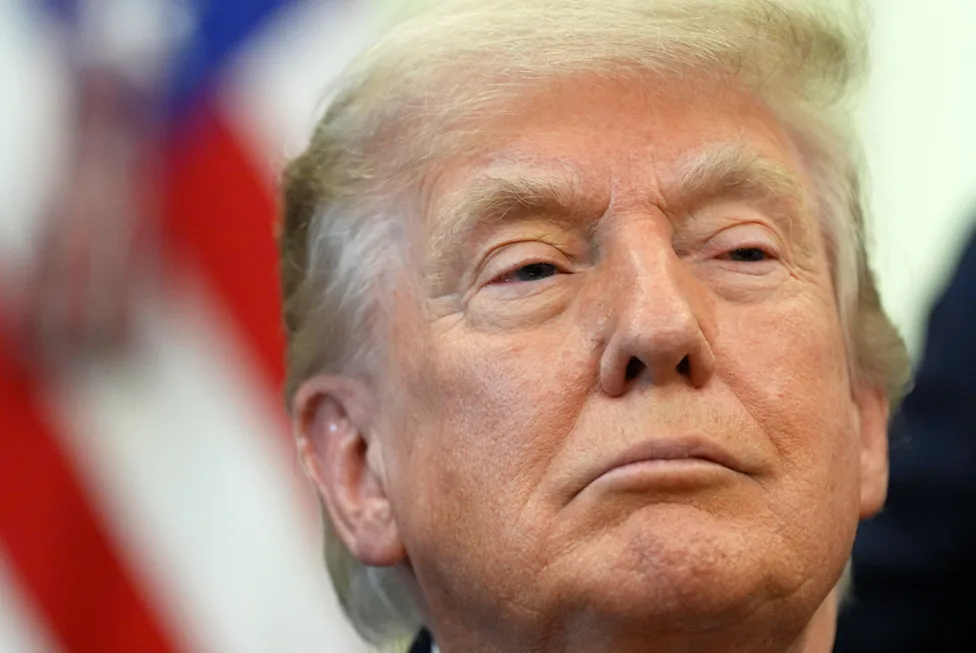
US President Donald Trump has confirmed that a “swift and lethal kinetic strike” conducted by American forces has killed Héctor Rusthenford Guerrero Flores, widely known as “Niño Guerrero,” whom he described as the leader of the violent Tren de Aragua criminal network.
The operation, according to Trump, targeted a compound linked to the gang inside Venezuela and was carried out with coordination involving Venezuelan authorities.
The White House said the mission represents one of the most significant overseas counter-gang operations under Trump’s renewed security strategy, which has increasingly focused on transnational organized crime and drug trafficking networks.
Tren de Aragua Designated as Terrorist Organization
The Tren de Aragua gang has been designated by the United States as a terrorist organization due to its involvement in violent crime, extortion, human trafficking, and drug-related operations across multiple continents.
Authorities have linked the group to criminal activity in North America, South America, and parts of Europe, with US federal prosecutors previously charging Guerrero Flores in connection with racketeering and terrorism-support allegations.
US officials also placed a multimillion-dollar bounty—up to $5 million—for information leading to his capture prior to the strike.
Pentagon and US Officials Confirm Operation Details
Defense Secretary Pete Hegseth confirmed on social media platform X that the strike occurred earlier in the week and specifically targeted a Tren de Aragua compound in Venezuela.
According to US military statements, the operation involved precision targeting and was described as part of a broader campaign against “narco-terrorist” organizations operating in the Western Hemisphere.
The US military has intensified similar operations in recent months, including maritime strikes on suspected drug trafficking vessels in the Caribbean and eastern Pacific.
Venezuela Confirms Operation and Casualties
In a rare joint acknowledgment, the government of Venezuela confirmed that the operation took place in the southeastern state of Bolívar, an area known for illegal mining activity and organized criminal networks.
Officials stated that clashes occurred during the raid, resulting in the death of Guerrero Flores, also known as “Niño Guerrero,” while other members of criminal groups were also involved in the confrontation.
The region has long been a hotspot for illicit gold mining operations, often controlled by armed groups with alleged ties to local power structures and security forces.
Trump Declares End of “Safe Haven” for Criminal Networks
President Trump used strong language in a social media post announcing the strike, declaring that Tren de Aragua operatives “no longer have safe haven in Venezuela or anywhere else.”
He vowed continued action against what he called “narco-terrorists,” stating that US forces would pursue criminal organizations globally.
Trump also shared aerial footage appearing to show an explosion at a small compound, framing it as evidence of the strike’s precision and effectiveness.
Expanding US Campaign Against Transnational Crime
The killing of Guerrero Flores comes amid an expanded US campaign targeting drug trafficking organizations that the administration says threaten American cities.
Since September, US forces have conducted multiple strikes on suspected smuggling boats in the Caribbean and Pacific regions, resulting in significant casualties according to military reports.
Trump has repeatedly linked organizations like Tren de Aragua to broader issues of immigration, urban violence, and narcotics distribution inside the United States, though some intelligence assessments have questioned the scale of their direct operations within US borders.
Origins of Tren de Aragua and Regional Expansion
Tren de Aragua originated in Venezuela’s Aragua prison system more than a decade ago, where it evolved from an inmate-led criminal structure into a transnational network.
The group expanded rapidly during Venezuela’s economic collapse, leveraging weakened state institutions and growing migration flows across Latin America.
Experts say the organization has exploited illegal mining zones, smuggling routes, and migrant corridors to build influence across multiple countries, though its structure remains decentralized compared to traditional cartels.
Regional Security and Political Fallout
The strike has heightened tensions in the region, particularly given Venezuela’s fragile political environment and ongoing disputes with the United States.
While Washington describes the operation as a counter-terrorism success, critics warn that cross-border strikes risk further destabilizing already volatile regions, especially in mineral-rich border zones.
Meanwhile, US officials insist that such operations are part of a broader effort to dismantle organized crime networks that profit from instability, trafficking, and illegal extraction industries.
Trump Administration Intensifies Security Doctrine
The operation reflects Trump’s broader second-term security strategy, which places heavy emphasis on immigration enforcement, transnational crime disruption, and aggressive counter-narcotics operations.
Administration officials argue that targeting leadership figures like Guerrero Flores is essential to dismantling network hierarchies and reducing violence linked to international criminal groups.
The White House has indicated that additional operations may follow as part of an ongoing campaign against organized criminal organizations operating across the Western Hemisphere.