
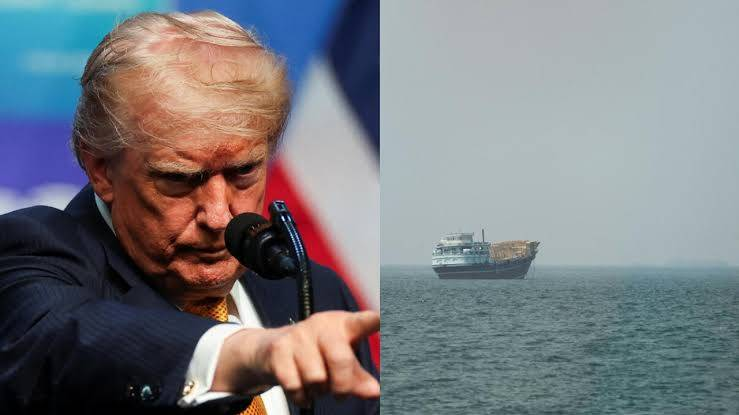
WASHINGTON — US President Donald Trump said Monday that the United States should receive financial compensation for protecting the strategically important Strait of Hormuz, claiming Washington has defended the key maritime route for years without payment.
Speaking during an interview with Fox News, Trump said the United States would become the “guardian” of the waterway and argued that wealthy nations benefiting from the security of global energy routes should help cover the costs.
“We’ll become the guardian of the Strait,” Trump said, adding that the US had been protecting the area “for nothing” but would now seek reimbursement.
“We’re going to get paid for guarding it. A lot of money, but we just want to be reimbursed for doing all of this, for putting our people in danger,” he said.
Strait of Hormuz Becomes Center of US-Iran Dispute
Trump’s comments came after renewed military exchanges between the United States and Iran, marking the most serious escalation since an earlier ceasefire agreement.
The Strait of Hormuz has become a major flashpoint in the conflict because of its importance to global energy markets. The narrow waterway connects the Persian Gulf with the Gulf of Oman and is used by a significant portion of the world’s oil shipments.
The dispute over control and security of the strait has intensified tensions between Washington and Tehran, with both countries presenting different claims about its status.
The United States maintains that the waterway remains open for international maritime traffic, while Iran’s Islamic Revolutionary Guard Corps (IRGC) has claimed that the strait is effectively closed.
Trump Criticizes Iran Negotiations
During the interview, Trump also criticized Iranian negotiators over recent diplomatic discussions, claiming Tehran attempted to revise agreements after previous meetings had reached a breakthrough.
Trump said negotiators had reached an understanding after hours of talks but later returned with requests for changes.
“Everything was agreed to yesterday. And they leave the room, and they call back, and they say we had to make a couple of changes,” Trump said.
He did not provide details about which parts of the agreement Iran wanted modified.
The comments highlight the difficulties facing diplomatic efforts between Washington and Tehran as both sides continue negotiations while maintaining pressure through military and economic measures.
Iran Works With Regional Mediators
Iranian officials said Monday that Tehran continues discussions with regional mediators in an effort to prevent further escalation.
Iran’s Foreign Ministry spokesperson said the government was communicating with representatives from Qatar, Pakistan, and Oman as part of efforts to reduce tensions and support diplomatic channels.
These countries have played important roles in facilitating indirect communication between Iran and the United States during previous periods of heightened conflict.
Global Energy Markets Watch Hormuz Crisis
The Strait of Hormuz remains one of the world’s most strategically important maritime routes, making any disruption a major concern for governments, businesses, and energy markets.
Any prolonged closure or restriction could affect oil supplies, increase transportation costs, and create further pressure on global energy prices.
Trump’s proposal that the US should be compensated for protecting the waterway adds another layer to ongoing debates over military spending, international security responsibilities, and the economic burden of maintaining global trade routes.
Future of Ceasefire and Diplomacy Remains Uncertain
While diplomatic efforts continue through regional mediators, recent military confrontations have raised doubts about whether a long-term agreement between Washington and Tehran can be achieved.
Both sides remain divided over security arrangements, nuclear issues, sanctions, and control of strategic waterways.
As negotiations continue, the Strait of Hormuz remains at the center of a wider geopolitical struggle involving military power, energy security, and international diplomacy.