

Trump Escalates Trade Pressure on EU Over Delayed Deal Implementation
U.S. President Donald Trump has issued a July 4 deadline for the European Union to fully implement commitments under a previously negotiated trade agreement, warning that failure to comply could trigger significantly higher tariffs on European goods, including automobiles.
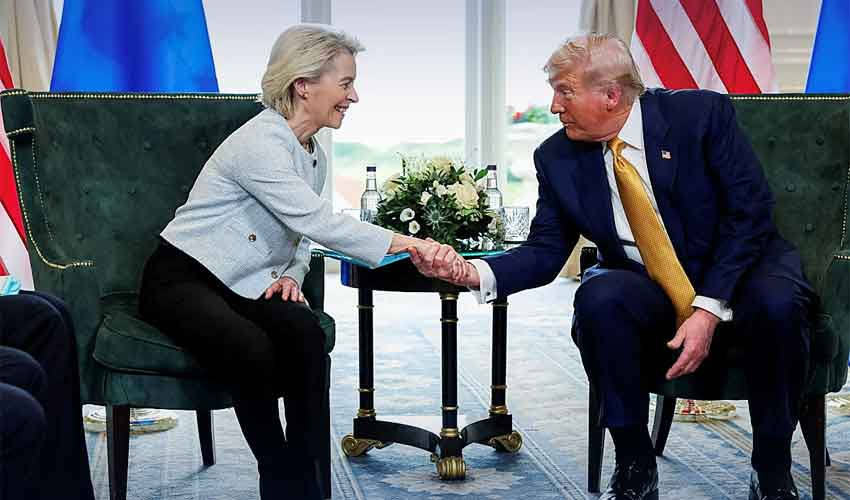
In a post on Truth Social, Trump said he delivered the message during what he described as a “great call” with European Commission President Ursula von der Leyen, adding that both leaders also reaffirmed that Iran must never obtain a nuclear weapon.
The warning marks a fresh escalation in transatlantic trade tensions, particularly as disputes over tariff reductions and regulatory commitments continue to stall implementation of the deal.
Auto Tariffs at Center of Trade Dispute
Trump has already moved to raise tariffs on EU-made vehicles to 25%, reversing a previously agreed 15% rate, citing what he says is slow compliance by European lawmakers.
The original trade agreement, signed last year in Scotland, required the EU to reduce tariffs on U.S. industrial goods to zero while granting expanded duty-free access for selected agricultural and seafood products.
However, implementation has been delayed as the legislation moves through the European Parliament, creating friction between Washington and Brussels.
“Much Higher Levels” of Tariffs Threatened
Trump warned that if the EU does not meet its obligations by July 4, tariffs could increase to “much higher levels,” signaling further economic pressure on European exporters.
He framed the agreement as one of the largest trade deals in history, stating that the United States had upheld its commitments while the EU had yet to fully act.
“I’ve been waiting patiently for the EU to fulfill their side of the Historic Trade Deal,” Trump said, referring to the pact negotiated in Turnberry, Scotland.
EU Says Progress Being Made but Divisions Remain
European Commission President Ursula von der Leyen confirmed the call with Trump and said both sides remain committed to implementing the trade deal.
She noted that discussions are ongoing and that progress is being made toward tariff reductions by early July.
However, internal divisions within the EU remain a major obstacle. Some member states and lawmakers are pushing for stricter enforcement mechanisms, including provisions that would allow suspension of tariff cuts if the United States fails to comply.
EU Parliament Debates Safeguards and Conditions
Within the European Parliament, trade officials acknowledge that negotiations are advancing but not yet complete.
Lawmakers are reportedly debating additional safeguards, including:
- Conditional tariff reductions tied to U.S. compliance
- Automatic suspension clauses if disputes arise
- Expiry mechanisms for tariff concessions in coming years
These internal disagreements have slowed legislative approval, contributing to Washington’s frustration over implementation delays.
US Trade Officials Say EU “Already Past Due”
U.S. Trade Representative Jamieson Greer criticized the EU’s pace of implementation, stating that delays have gone on for months beyond expected timelines.
He suggested that Washington could consider additional trade measures beyond auto tariffs if compliance issues are not resolved.
“The autos is just one element,” Greer said, adding that the United States remains fully compliant with its obligations under the agreement.
Trade Tensions Add to Broader US–EU Strains
The tariff dispute comes at a time of broader geopolitical and economic tension between the United States and Europe, including disagreements over defense spending, the Iran conflict, and global energy policy.
While both sides publicly emphasize cooperation, ongoing friction over trade enforcement highlights underlying structural disagreements within the transatlantic alliance.
Deadline Looms as Negotiations Continue
EU officials are scheduled to continue discussions later this month, but the July 4 deadline set by Trump adds pressure to finalize outstanding issues quickly.
If no agreement is reached, analysts expect renewed tariff escalation could impact key sectors, including automotive manufacturing, agriculture, and industrial exports.