

Twenty-five US states have launched a major legal challenge against President Donald Trump’s latest tariff policies, arguing that the administration exceeded its authority by imposing broad import taxes on dozens of countries.
The coalition of states, mostly led by Democratic governors, filed a lawsuit on Monday at the US Court of International Trade in New York. The states are asking the court to block the implementation of the tariffs, declare them unlawful, and require the federal government to provide refunds for any collected duties.
The legal battle marks the latest clash between Trump’s trade agenda and opponents who argue that his tariff strategy could harm American businesses, consumers, and state economies.
States Challenge Trump’s Global Tariff Strategy
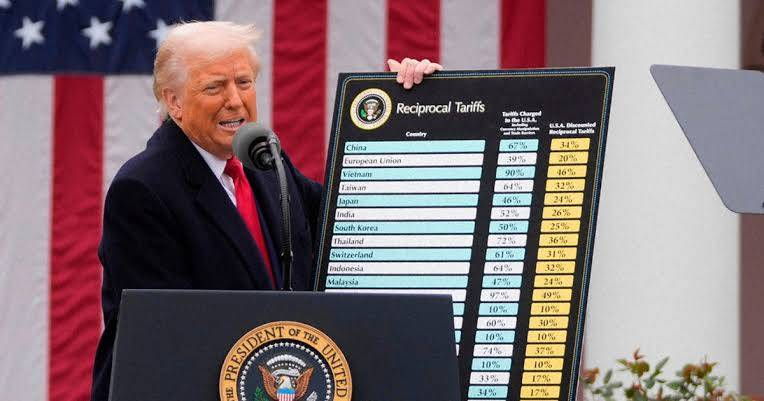
The lawsuit focuses on new tariffs ranging from 10% to 12.5% that were introduced against around 60 trading partners, representing a significant portion of US imports.
The states claim the administration improperly used investigations by the US Trade Representative (USTR) into alleged forced labor practices as a justification for imposing widespread tariffs.
In their court filing, the coalition argued there was no direct connection between concerns over labor practices in international supply chains and the broad tariff measures applied to multiple countries.
The states wrote that the administration’s actions represented an attempt to expand presidential tariff authority beyond legal limits.
The lawsuit states that while the states oppose forced labor worldwide and support stronger worker protections, the federal government cannot use those concerns as a basis for what they describe as an unlawful tariff policy.
Trump Administration Defends Tariff Measures
The White House quickly responded to the lawsuit, defending the legality of the tariffs and arguing that the administration has the authority to protect US economic interests.
White House spokesperson Kush Desai said the United States was using its legal powers to address trade practices that negatively impact American commerce.
According to the administration, tariffs are an important tool for negotiating better trade agreements and preventing foreign countries from taking advantage of the US economy.
Trump has repeatedly argued that previous trade policies allowed other nations to benefit unfairly from access to American markets. Since beginning his second term, the president has expanded his tariff approach, targeting both allies and rivals in an effort to reshape global trade relationships.
Legal Fight Follows Earlier Tariff Disputes
The current lawsuit follows previous challenges to Trump’s tariff policies. Earlier tariffs introduced under the International Emergency Economic Powers Act faced legal opposition, with the US Supreme Court ruling against that approach in February.
The administration later introduced a temporary 10% global tariff, which expired in July. The new Section 301 tariffs replaced that measure after the previous policy ended on July 24.
Among the 25 states involved in the latest lawsuit, 23 have Democratic governors, while Nevada and Vermont are led by Republican governors.
The states’ complaint argues that the administration’s tariff investigations were rushed and designed to justify expanding presidential power over trade policy.
The filing describes the tariff action as “arbitrary, capricious, and contrary to law,” claiming the government exceeded its authority under the Trade Act of 1974.
Tariff Debate Could Impact US Economy and Global Trade
The legal dispute adds another layer of uncertainty to US trade policy as businesses continue adjusting to changing import costs.
Companies that rely on international supply chains have warned that higher tariffs could increase expenses, potentially affecting prices for goods ranging from electronics and machinery to consumer products.
Supporters of Trump’s tariff strategy argue that import taxes can encourage domestic manufacturing, strengthen American industries, and pressure foreign governments into changing trade practices.
The latest court case does not affect Trump’s separate industry-specific tariffs on sectors such as steel, automobiles, and other goods, which were introduced under different legal authorities.