
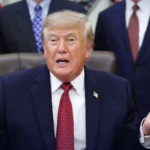
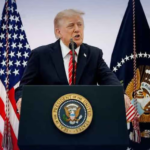

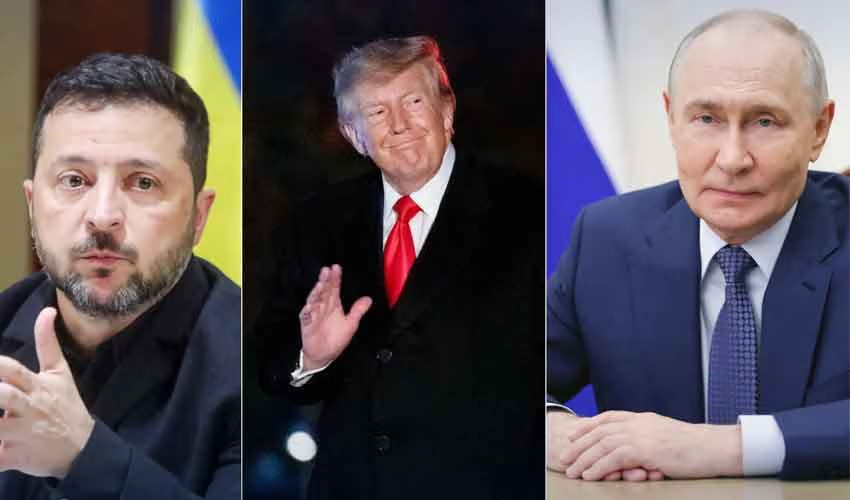
US President Donald Trump has announced an immediate energy ceasefire between Russia and Ukraine, but Ukrainian President Volodymyr Zelensky says Kyiv is still waiting for details and wants Moscow to confirm its commitment to the agreement.
US President Donald Trump has announced what he described as an immediate halt to attacks on energy infrastructure in the Russia-Ukraine war, raising fresh questions about the prospects for de-escalation as tensions between Washington and Kyiv continue to grow.
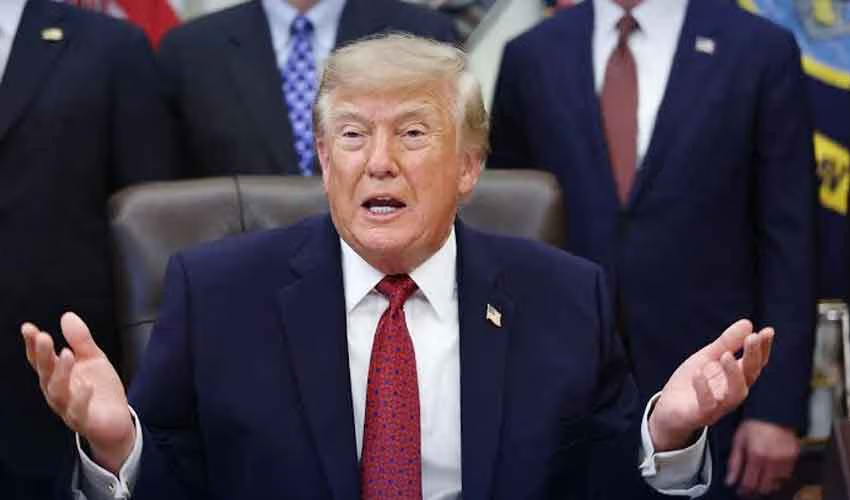
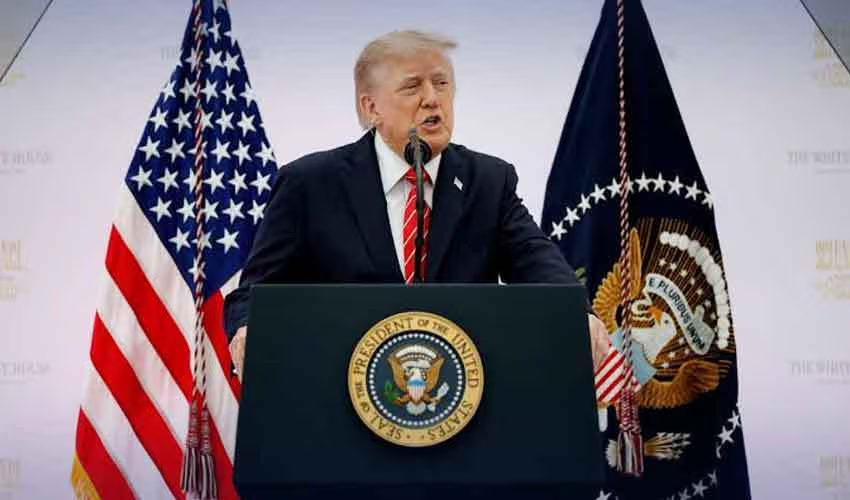
Trump made the unexpected announcement on Sunday through his Truth Social platform, claiming that both Russia and Ukraine had agreed to an energy ceasefire. However, he did not provide specific terms, and Moscow had not publicly confirmed the agreement at the time of the announcement.
Ukrainian President Volodymyr Zelensky welcomed the proposal but emphasized that Ukraine needed clear information from the United States before the agreement’s scope and implementation could be assessed.
The announcement followed days of mounting pressure from Trump on Kyiv to stop attacking Russian oil refineries, amid growing concerns about rising global fuel prices and the political impact of higher energy costs in the United States.
Trump Declares Immediate Halt to Energy Attacks
In his Truth Social post, Trump announced that the energy ceasefire was effective immediately and warned both sides against violating it.
“Effective immediately, there is an ENERGY CEASEFIRE in the War between Russia and Ukraine. Both parties have agreed. Do not break it!” Trump wrote.
The announcement came after a sharp deterioration in relations between Trump and Zelensky. On Saturday, Trump publicly warned the Ukrainian leader to stop attacks on Russian oil refineries and argued that Zelensky had missed several opportunities to negotiate an agreement with Moscow.
Trump also called for Ukraine to hold new elections, adding another point of disagreement between the two leaders.
Despite the US president’s declaration, the absence of publicly available terms and an immediate confirmation from Russia left uncertainty over whether the ceasefire had been formally agreed upon by both governments.
Zelensky Supports Ceasefire but Demands Clarity
Zelensky said Ukraine was prepared to support a halt to attacks on energy infrastructure but stressed that Russia must make the same commitment.
The Ukrainian president said he had discussed Trump’s announcement with NATO Secretary General Mark Rutte, Canadian Prime Minister Mark Carney, and Finnish President Alexander Stubb.
“Ukraine supports the ceasefire, and it is important that Russia support it as well. We are awaiting details from the American side,” Zelensky said in a message posted on Telegram.
However, Ukrainian officials continued to report Russian attacks on energy facilities after Trump’s announcement.
In his nightly video address, Zelensky said Russian forces were still targeting Ukrainian energy infrastructure, including a combined heating and power plant in Kharkiv, the country’s second-largest city. A Ukrainian official confirmed that the facility had been attacked after the ceasefire announcement.
The reports raised immediate questions about how the proposed arrangement would work, whether it covered all energy infrastructure, and how compliance would be monitored.
US Pressure on Kyiv Adds to Diplomatic Tensions
The announcement followed increasing pressure from Washington for Ukraine to suspend attacks on Russian energy facilities.
According to a person familiar with the situation, the United States had threatened to suspend intelligence sharing with Ukraine and restrict weapons procurement through the Prioritised Ukraine Requirements List (PURL) system as part of its efforts to persuade Kyiv to stop the strikes. The reported threats were also covered by the Financial Times.
The source added that Zelensky was consulting European leaders about ways to reduce tensions with Trump.
The White House had not immediately responded to a request for comment on the ceasefire announcement.
Ukraine has maintained that any agreement to stop attacks on Russian refineries must be accompanied by a halt to Russian strikes against Ukrainian power infrastructure. Kyiv argues that a one-sided suspension would leave its energy facilities vulnerable while limiting its ability to respond.
The disagreement highlights the challenges facing US-led diplomatic efforts to reduce fighting between the two countries.
Rising Fuel Prices Put Energy Policy in the Spotlight
The proposed ceasefire also comes amid rising global fuel prices that have become a political concern for the Trump administration.
The war in the Middle East, which began in February according to the supplied report, has been widely linked to higher energy costs. Increased diesel prices have placed additional pressure on consumers and businesses, while raising concerns for Republicans ahead of the US midterm elections.
Trump has blamed Ukrainian attacks on Russian oil refineries for contributing to the pressure on fuel markets and has pushed for measures that could increase the availability of energy supplies.
Earlier, the president announced a diesel supply arrangement with Russia, saying Moscow would provide more than 300,000 metric tons of diesel for US and international markets. The quantity was described as equivalent to approximately 2.25 million barrels of fuel.
The announcement drew criticism from several US lawmakers. Republican Senator Thom Tillis of North Carolina questioned whether the arrangement could be illegal and warned that it might put American lives at risk.
Zelensky rejected the suggestion that Ukraine was responsible for global fuel price increases, arguing that the conflict in the Middle East was a more significant factor.
Ukraine Rejects Calls for Elections During Wartime
Trump’s pressure on Kyiv has extended beyond energy policy to Ukraine’s domestic political arrangements.
The US president called for new elections in Ukraine, where national elections have been suspended since Russia’s full-scale invasion in 2022. Ukrainian law prohibits elections under martial law, citing the conditions imposed by the ongoing war.
Zelensky said the decision about Ukraine’s leadership belonged to its citizens but argued that voting would require an end to the fighting.
“Please tell Putin, give us two months, 60 days of total ceasefire, 60 days, and we will organise elections,” Zelensky said.
His position reflects Kyiv’s insistence that credible elections cannot take place under continuing wartime conditions without adequate security guarantees.
The issue has also generated anger among some Ukrainian residents, who have criticized Trump’s suggestions that Ukraine should replace its leadership to facilitate negotiations with Russian President Vladimir Putin.
Russian Attacks Reported as Ceasefire Remains Uncertain
Despite Trump’s announcement, Ukrainian officials reported additional casualties from Russian attacks on Sunday.
According to the supplied report, three people were killed outside a grocery store in Kharkiv, while another three died in the western Ukrainian city of Ivano-Frankivsk.
Neighboring Moldova also reported an incursion by drones believed by officials to be Russian, with the aircraft landing approximately 35 kilometers (22 miles) from the capital, Chisinau.
These developments added to concerns over the security situation across the region as officials awaited clarification of the proposed energy ceasefire.
For now, the announcement represents a potential diplomatic opening, but questions remain over the agreement’s exact terms, Russia’s formal position, and whether both sides will stop attacks on critical energy infrastructure. Zelensky’s request for further details underscores the difference between Trump’s declaration and the practical steps needed to establish and enforce a ceasefire.