







The US Navy has awarded RTX’s Raytheon a multiyear contract worth up to $24.4 billion to accelerate production of Standard Missile-6 interceptors, as Washington works to rebuild inventories of critical munitions.
The agreement covers an initial five-year period and includes two additional option years. The Navy says the long-term arrangement is intended to give Raytheon greater certainty over future demand while allowing the company to expand manufacturing capacity and strengthen its supply chain.
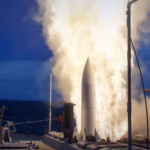
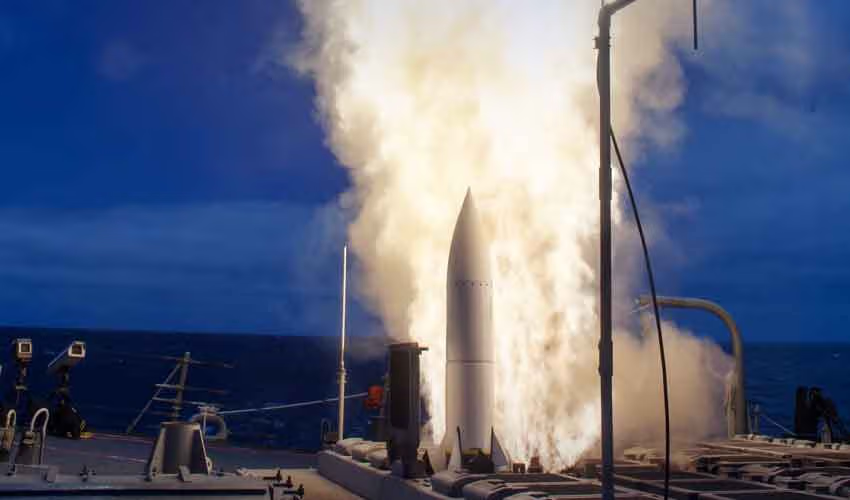
The SM-6 is one of the US Navy’s key multi-mission missile systems. It can be used for air defense, anti-surface warfare and ballistic missile defense, giving naval forces a weapon capable of addressing several types of threats.
Pentagon pushes faster missile production
The new contract is part of a broader US effort to increase the output of major weapons systems.
The Pentagon has been pursuing multiyear procurement agreements as it seeks to encourage defense manufacturers to invest in factories, equipment, workers and suppliers. Longer contracts can provide manufacturers with a clearer view of future orders and potentially improve production efficiency.
The Defense Department said the SM-6 agreement is intended to increase manufacturing throughput and generate cost savings across the defense industrial base.
Raytheon President Phil Jasper said the company has been investing in its facilities and operations to remove production constraints and increase capacity.
RTX said its efforts include expanding its skilled workforce, strengthening relationships with suppliers and using greater automation in manufacturing.
SM-6 production target exceeds 500 missiles annually
The agreement follows earlier steps by Raytheon and the Pentagon to increase SM-6 production.
RTX said in February that the new production arrangement was designed to support an annual output rate of more than 500 SM-6 interceptors. The company has also completed a $115 million expansion at its Alabama facility, where components of the SM-6 and other missile systems are assembled into integrated weapons.
Increasing annual production is particularly important because the SM-6 is used across multiple missions rather than being restricted to a single role.
Raytheon describes the missile as a combat-proven system capable of anti-air warfare, anti-surface warfare and ballistic missile defense. The weapon has been launched from US Navy ships and land-based platforms.
Contract follows major AMRAAM and Patriot deals
The SM-6 award comes shortly after other large US missile procurement agreements.
In late September, the Pentagon announced a provisional $20.7 billion multiyear agreement with Raytheon to increase production of AIM-120 AMRAAM air-to-air missiles.
Earlier in the year, Lockheed Martin received a $58.6 billion contract for Patriot interceptors as the United States sought to expand production of air and missile defense systems.
Taken together, the agreements represent a major push to increase the availability of weapons used by US forces and their allies.
US weapons inventories under pressure
The procurement drive comes amid concerns about the pace at which the United States can replenish certain missile inventories following recent military operations.
Reuters reported that the Pentagon is seeking to rebuild stockpiles affected by conflicts in the Middle East. US military operations against Iran have been among the factors contributing to concerns about ammunition availability.
The broader issue extends beyond the SM-6. US defense officials and industry representatives have pointed to production bottlenecks involving components, manufacturing capacity and specialized labor.
The Navy’s latest agreement is intended to address some of those challenges by providing a longer-term demand signal to the defense industry.
Congress still has a role in funding
Despite the size of the procurement agreement, the headline value of $24.4 billion represents the maximum potential value over the contract period rather than necessarily an amount being paid immediately.
Industry executives have warned that congressional appropriations remain important for turning planned procurement into funded production and allowing companies to make major long-term investments.
Inside Defense reported that the Navy’s fiscal 2027 budget request included $4.3 billion for 540 Standard Missiles, while Congress had not yet passed the relevant fiscal 2027 appropriations bill at the time of the contract announcement.
For Raytheon, the multiyear agreement provides a clearer production outlook as the company continues expanding its missile manufacturing network.
Why the SM-6 matters to the US Navy
The SM-6 is designed to provide naval forces with a flexible response against different aerial and maritime threats.
Its missions include intercepting aircraft and missiles, engaging surface targets and contributing to ballistic missile defense. The system can be integrated with the US Navy’s ship-based combat systems and has also been adapted for land-based launchers.
The combination of these capabilities has made the missile an important part of the Navy’s broader air and missile defense architecture.
With the new multiyear agreement, Raytheon is expected to continue expanding production while the Navy seeks to build a larger and more predictable inventory of SM-6 interceptors.