SEO Headline: Trump Threatens to Declare Strait of Hormuz US Territory as Iran Rejects US Control
Meta Description: Donald Trump says he may declare the Strait of Hormuz US territory after defeating Iran, while Tehran insists only Iran can decide when the strategic waterway reopens.
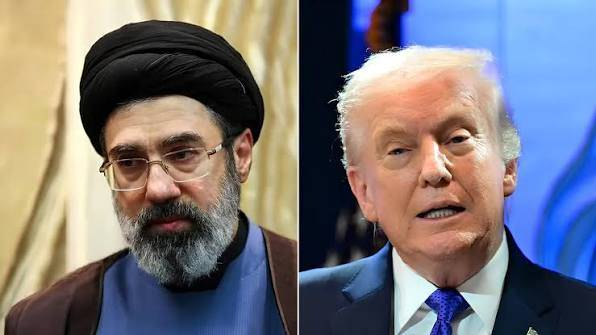
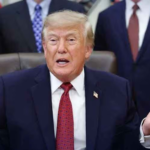
President Donald Trump has dramatically escalated his rhetoric over the Strait of Hormuz, saying the United States could soon declare the strategically important waterway US territory.
Speaking in New York on Friday, Trump said the declaration could come after what he described as the defeat of Iran. The comments came as Washington and Tehran continued efforts to resolve their nearly six-month confrontation.
Trump’s remarks have raised questions about whether the statement represents an actual US policy proposal or another escalation in his public pressure campaign against Iran.
Trump Threatens New Move Over Hormuz
Trump said the United States would take additional action against Iran and promised severe economic measures as negotiations between the two countries remained unresolved.
The president’s comments followed remarks by Treasury Secretary Scott Bessent, who said Washington was preparing economic measures against Tehran that would be unprecedented.
Trump has defended the pressure campaign despite concerns about higher gasoline prices for American consumers. He argued that increased energy costs were a necessary price for preventing Iran from acquiring a nuclear weapon.
The president has also repeatedly claimed that the United States has control over the Strait of Hormuz.
In earlier remarks on Truth Social, Trump described the US position in the waterway as “full control,” reinforcing his administration’s increasingly forceful stance over one of the world’s most important maritime routes.
Iran Rejects Trump’s Strait of Hormuz Claim
Iran has strongly rejected Trump’s assertion and insists that Tehran remains the authority responsible for determining whether the Strait of Hormuz is open or closed.
Iranian Deputy Foreign Minister Kazem Gharibabadi said the waterway could not simply be claimed by another country through a presidential statement, military deployment or political speech.
He maintained that the strait would remain under Iranian control and would only reopen when Tehran’s conditions are met.
Iranian officials have repeatedly linked the reopening of the waterway to the end of US military intervention and the fulfillment of demands associated with the June framework agreement between Washington and Tehran.
The conflicting claims have turned the Strait of Hormuz into one of the most important flashpoints in the ongoing US-Iran crisis.
Commercial Shipping Through Hormuz Nearly Halted
The confrontation is already having a major impact on international shipping.
The Strait of Hormuz is a critical energy corridor through which roughly one-fifth of the world’s oil and liquefied natural gas shipments normally pass.
A prolonged disruption could therefore have consequences far beyond the Middle East, potentially affecting gasoline prices, energy markets, shipping costs and inflation in countries that depend on imported fuel.
US Central Command said its forces had redirected dozens of commercial vessels while enforcing the naval blockade. According to the figures provided in the supplied material, 62 commercial vessels had been redirected, while three were disabled and two boarded as of August 14.
Iran, meanwhile, continues to restrict vessels that it accuses of attempting to pass through the waterway without its authorization.
Two UAE Ships Reportedly Attacked
Tensions intensified further after two vessels linked to the United Arab Emirates were reportedly attacked while traveling through the Strait of Hormuz.
Abu Dhabi National Oil Company said the two ships were attacked Thursday evening.
The UAE government blamed Iran for the incidents, adding another layer to an already tense confrontation over commercial shipping and control of the waterway.
Tehran had not immediately commented on the accusations contained in the supplied report.
The attacks have increased concerns among shipping companies and energy traders about the risks of operating in the region while US and Iranian naval forces remain involved in the standoff.
Iran Says No Decision on New US Talks
Despite continuing contacts involving regional intermediaries, Iranian Foreign Minister Abbas Araghchi said Tehran had not decided to resume formal negotiations with Washington.
Araghchi said Qatar and Pakistan remained in communication with Iran and were passing messages between the parties, but he stressed that such exchanges did not constitute formal negotiations.
He also disputed descriptions of the Islamabad memorandum as a traditional 60-day ceasefire. According to Araghchi, the document referred to ending the war rather than simply extending a temporary ceasefire.
Iran is reportedly exploring alternative diplomatic arrangements that could eventually lead to a broader agreement.
Araghchi also said discussions with Oman were focused on establishing a potential maritime route through the Strait of Hormuz.
Iran Insists Ships Need Its Permission
Iran’s military leadership has reinforced Tehran’s position on commercial vessels.
Ibrahim Zolfaqari, spokesperson for Iran’s Khatam al-Anbiya Central Headquarters, said ships would not be allowed to pass through the Strait of Hormuz without Iranian permission and supervision.
The statement directly contradicts Trump’s claim that the United States now controls the strategic waterway.
The dispute therefore extends beyond military pressure and economic sanctions, with Washington and Tehran presenting fundamentally different positions over who has authority over maritime traffic through Hormuz.
Global Energy Markets Face Further Pressure
The growing confrontation around the Strait of Hormuz is being closely watched by energy markets around the world.
Any prolonged reduction in shipping through the waterway could restrict global oil and LNG supplies and place upward pressure on energy prices.
For the United States, higher fuel costs could also become a domestic political issue as the Trump administration attempts to maintain economic pressure on Iran while limiting the impact of the crisis on American consumers.
For Iran, keeping pressure on the waterway provides leverage against Washington but also risks further international economic disruption.
With Trump threatening additional action and Tehran refusing to recognize US control over the strait, the future of commercial shipping through Hormuz remains uncertain.