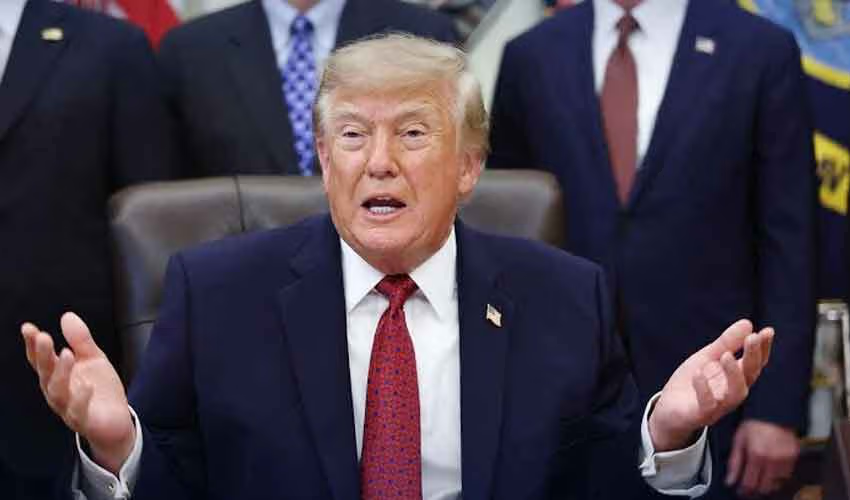








President Donald Trump is promising a new era of American space exploration, calling for a major increase in rocket launches and expanded commercial missions to the Moon and Mars.
The White House said Thursday that Trump’s space policy is designed to strengthen US leadership in space transportation and encourage greater involvement from private companies.
The initiative comes as the United States faces growing competition from China in the race to return astronauts to the Moon before 2030.
Trump Calls for Major Expansion of US Space Travel
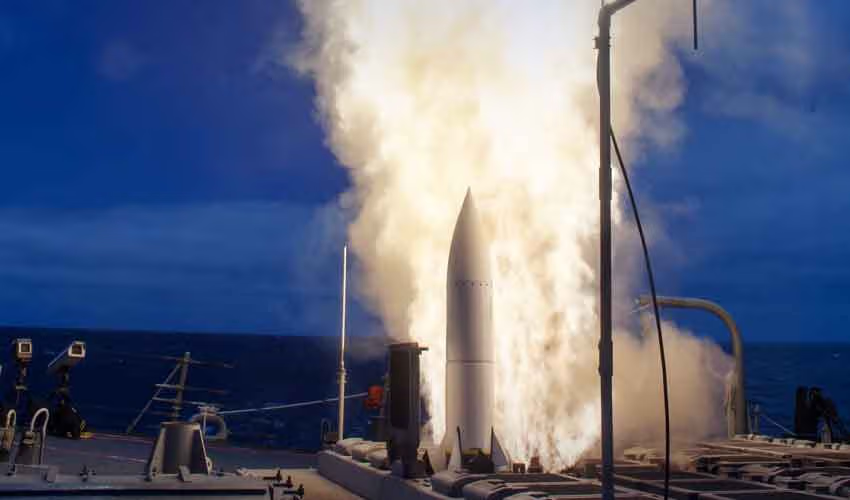
Under the new policy, the Trump administration wants the United States to dramatically increase the number of launches and spacecraft reentries taking place on American soil.
The goal is to reach more than 1,000 launches and reentries annually by 2030.
The target would represent a significant expansion of America’s current space transportation infrastructure and would require additional launch sites, landing facilities and commercial investment.
Trump’s administration is also encouraging private companies to play a larger role in future space exploration.
The president has called for government agencies to identify additional locations that could be used to launch and land spacecraft as commercial space activity expands.
NASA Urged to Support Commercial Moon Missions
In a memorandum published Thursday, Trump directed NASA to facilitate commercial transportation to and from the Moon.
The policy also calls for NASA to support commercial robotic missions to Mars and explore possible commercial options for eventually transporting humans between Earth and Mars.
The approach reflects a growing shift toward public-private partnerships in space exploration.
Rather than relying entirely on government-built spacecraft and infrastructure, the administration wants private aerospace companies to take a larger role in developing transportation systems and supporting missions beyond Earth.
Moon Base Could Support Future Astronauts
NASA is already working toward establishing a sustained human presence around and eventually on the lunar surface.
The agency plans to use robotic vehicles to construct infrastructure that could later support astronauts and future scientific missions.
A permanent or semi-permanent lunar base could provide researchers with an opportunity to study the Moon while also serving as a potential testing ground for technologies needed for longer missions.
The Moon could also become an important stepping stone for eventual human missions to Mars.
US and China Race Back to the Moon
The renewed American space push comes as Washington and Beijing compete for leadership in lunar exploration.
The United States is aiming to return astronauts to the Moon more than five decades after humans first walked on the lunar surface.
China has also developed an ambitious lunar exploration program and is working toward sending astronauts to the Moon before the end of the decade.
The competition has transformed lunar exploration into a major strategic and technological priority for both countries.
Success in developing reusable rockets, lunar landers, communications systems and surface infrastructure could influence the future direction of the global space industry.
SpaceX and Blue Origin Race to Develop Lunar Technology
Private aerospace companies are expected to play a central role in America’s next phase of lunar exploration.
NASA is targeting 2027 for a test involving an in-orbit rendezvous between its spacecraft and at least one commercial lunar lander.
Two major private companies are competing to develop the technology needed for these missions: SpaceX, founded by Elon Musk, and Blue Origin, founded by Jeff Bezos.
Their competition reflects the increasingly important role of billionaire-backed companies in America’s space program.
SpaceX has already become one of the world’s most active commercial launch providers, while Blue Origin has been developing rockets and lunar systems aimed at supporting future missions.
Mars Remains the Long-Term Goal
Beyond the Moon, Trump’s space policy places significant emphasis on Mars.
Musk founded SpaceX in 2002 with the long-term ambition of transporting humans to Mars and eventually establishing settlements there.
Sending astronauts to Mars would be considerably more difficult than returning humans to the Moon because of the distance, travel time, radiation exposure and challenges involved in sustaining crews far from Earth.
The Trump administration’s emphasis on commercial transportation to Mars suggests that private industry could eventually become a major partner in developing the technology required for human exploration of the Red Planet.
The push for more launches, expanded commercial spaceflight and lunar infrastructure marks a significant attempt to increase America’s presence beyond Earth and establish the United States as a dominant force in the next generation of space exploration.