
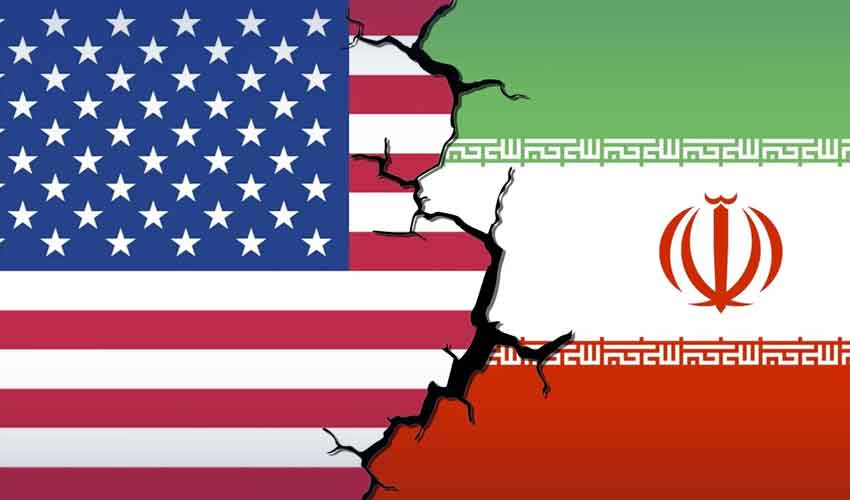
Iran Issues Fresh Warning Amid Ongoing US Negotiations
Iran’s top leadership has issued a renewed and strongly worded warning to the United States and its regional allies, saying any future aggression against the country would trigger a significantly harsher response.
The statement comes as diplomatic discussions between Tehran and Washington continue over a possible framework to end the months-long conflict, even as military tensions remain elevated across the Middle East.
Khamenei Rejects US Military Presence in Gulf Region
Iran’s Supreme Leader Ayatollah Mojtaba Khamenei said Gulf nations would no longer serve as protective buffers for US military bases in the region.
In a message shared via Telegram, he argued that regional countries would no longer act as “shields” enabling American military operations.
Khamenei claimed the United States would no longer find safe territory to expand its influence or maintain what he described as forward military positioning in the Middle East.
Call for Islamic Unity and Regional Cooperation
The Iranian leader also urged Muslim-majority countries to strengthen cooperation and establish a collective framework for regional security and development.
He called for greater unity among Islamic nations, stating that shared interests should take priority over external alliances and geopolitical divisions.
Khamenei emphasized that cooperation among Muslim states would serve long-term stability and regional independence.
Iran Declares Strength and Resistance Against Enemies
In his remarks, Khamenei said Iran had withstood external pressure and claimed that its adversaries had failed to achieve their objectives during the conflict.
He stated that Iran had delivered what he described as a strong response to aggression and asserted that the country’s resistance movement had remained resilient throughout the war.
The Supreme Leader also reiterated ideological slogans tied to Iran’s long-standing political stance toward the United States, while expressing confidence in what he called the eventual decline of its opponents.
Iran Accuses US of Civilian Weapon Test Claims
Separately, Iranian Foreign Ministry spokesperson Esmail Baqaei made serious allegations against the United States, claiming advanced weapons were used during strikes that allegedly targeted civilian areas.
He stated that airburst munitions dispersing high-velocity fragments were used in an attack on a sports facility, which he claimed resulted in civilian casualties, including children.
Iran described the incident as a deliberate and unlawful act, calling it a violation of international humanitarian law.
These claims have not been independently verified by international observers.
Iranian Military Signals Stronger Future Response
Iran’s Armed Forces spokesperson Abolfazl Shekarchi issued a separate warning, stating that any renewed military action would be met with a much stronger retaliation than in previous engagements.
He cautioned that future conflict could expand beyond regional boundaries if escalation continues, reinforcing Tehran’s position that it remains fully prepared for confrontation.
Iranian officials repeatedly emphasized that the country would respond decisively to any perceived threat.
Domestic Political Messaging on Negotiation Strategy
Within Iran’s political system, lawmakers and security officials have urged negotiators to approach any talks with the United States from a position of strength.
Parliamentary spokesperson Ebrahim Rezaei said Iran’s leadership should avoid concessions on what he described as core national red lines.
He argued that maintaining a firm stance would prevent external pressure and strengthen Iran’s negotiating position in any future agreement.
Tensions Persist as Diplomacy Continues
The latest warnings underscore the fragile balance between diplomacy and confrontation as Tehran and Washington continue efforts to define a possible settlement framework.
While negotiations remain active, Iranian officials insist that the country will continue to respond forcefully to any perceived threat, signaling that the risk of escalation remains high.