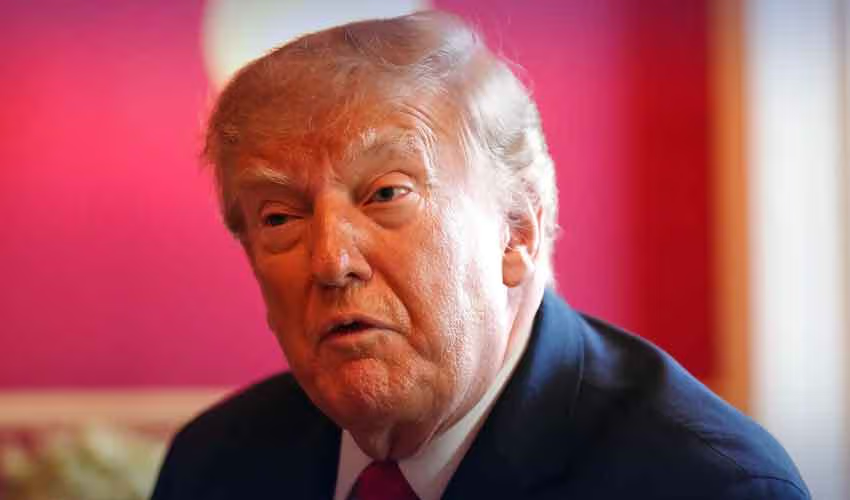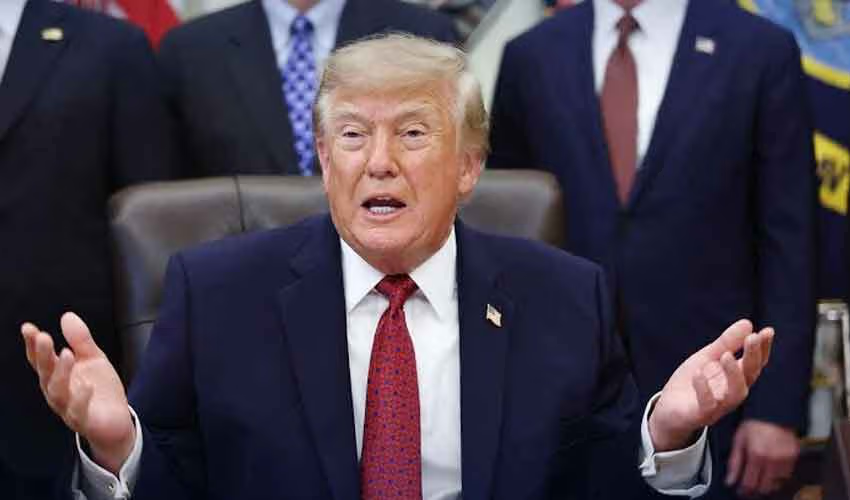
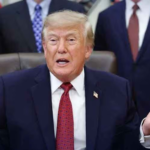


President Donald Trump has temporarily paused plans to impose new 50% tariffs on Canadian goods, saying the United States and Canada have reached a trade agreement that still requires final documentation.
Trump announced the three-day pause late Tuesday, shortly before the tariffs were scheduled to take effect at midnight.
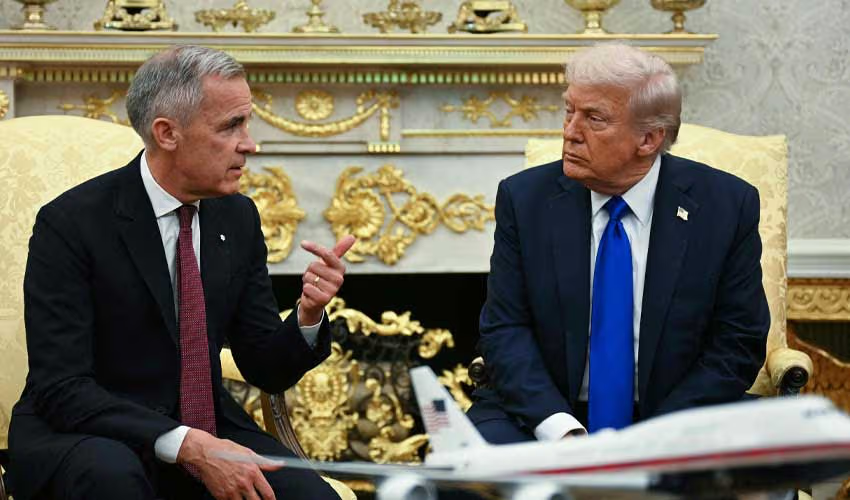
The move followed a conversation between Trump and Canadian Prime Minister Mark Carney, as negotiators from both countries worked through weeks of intense and largely private discussions aimed at resolving a growing trade dispute.
Trump Says US and Canada Have a Deal
Trump announced the tariff delay in a post on Truth Social, saying the decision was based on the two countries having reached a deal “subject to the finalization of documents.”
The White House later published a proclamation outlining some of the commitments expected from Canada.
Canadian Prime Minister Mark Carney offered a more cautious assessment, saying substantial progress had been achieved but warning that important work remained.
“While we continue this work, Canada remains focused on building a stronger, more independent and more competitive economy at home,” Carney said.
The different wording from Washington and Ottawa suggests that negotiations may not yet be completely finished.
New Agreement Could Expand US Market Access
The Office of the US Trade Representative said the proposed agreement would include several major provisions.
Among them are comprehensive market access for American products, economic security commitments and alignment on digital trade rules.
Trump’s proclamation also said Canada had committed to addressing US concerns involving Canadian duties on dairy products, alcoholic beverages and motor vehicles.
Neither government immediately released the full details of the agreement.
The lack of a complete text means several major questions surrounding tariffs and market access remain unresolved.
Canadian Auto Industry Remains a Key Issue
Automobiles have been one of the most difficult areas in the negotiations.
The planned tariffs would have affected approximately $20 billion worth of Canadian imports and would have applied even to products that qualify for preferential treatment under the United States-Mexico-Canada Agreement, or USMCA.
Earlier US tariffs had largely spared significant portions of Canadian industry because of the trade agreement.
Industry sources said Washington and Ottawa had also discussed reducing US Section 232 tariffs on Canadian vehicles from 25% to 15%.
Further reductions could reportedly depend on how much US-made content is incorporated into vehicles produced in Canada and Mexico.
Washington and Ottawa Disagree Over Tariff Calculations
One of the biggest disagreements has involved how the amount of US content in vehicles should be calculated when determining tariff deductions.
US officials have pushed for deductions based only on content produced in the United States.
Canada has argued that North American content, including parts manufactured in Canada and Mexico, should be included.
The dispute has added complexity to negotiations involving the automotive sector, where supply chains cross the US-Canada and US-Mexico borders multiple times during production.
The US Commerce Department also issued new rules Tuesday requiring automakers exporting vehicles from Canada and Mexico to certify their current levels of US content.
The new system reduces the certification process from twice a year to once annually, although automakers must still recertify vehicle content by September 30 for the next annual cycle beginning December 1.
Canadian Businesses Feared Major Economic Impact
Canadian trade experts and industry representatives had warned that the proposed 50% tariffs could have caused significant economic damage.
Industries considered particularly vulnerable included lumber, wine and dairy, with businesses warning that higher tariffs could result in job losses, reduced investment and some closures.
The dispute also threatened to complicate broader discussions surrounding the future of the USMCA.
Canadian officials had been preparing possible measures to support industries affected by new American tariffs if an agreement could not be reached.
Canada’s minister responsible for US trade, Dominic LeBlanc, and chief trade negotiator Janice Charette had been in Washington for negotiations.
They met with US Trade Representative Jamieson Greer and Commerce Secretary Howard Lutnick on Monday as the two sides worked toward a last-minute agreement.
US Spirits Industry Welcomes Tariff Pause
The US Distilled Spirits Council welcomed Trump’s announcement and called for a negotiated solution to restore American spirits to retail shelves across Canada.
The organization also pushed for a return to a zero-for-zero tariff arrangement for the spirits industry.
The issue has become part of the wider trade dispute between the two neighboring countries, with Canadian provinces taking different approaches to American alcoholic products.
US officials have also raised concerns about Canada’s dairy market access rules and restrictions involving American liquor.
Trump Revives Talk of Keystone XL Pipeline
Trump also raised the possibility of reviving the Keystone XL pipeline, a major cross-border energy project canceled by former President Joe Biden in 2021.
In his social media post, Trump suggested that Keystone XL “may be awoken from the grave,” although he did not provide details about what would be required to restart the project.
The pipeline had faced years of opposition from Indigenous groups and environmental organizations before its cancellation.
Trump’s renewed reference to Keystone XL adds an energy component to the broader US-Canada trade negotiations.
The three-day tariff pause gives negotiators additional time to finalize the agreement and resolve remaining disagreements before Washington decides whether the threatened 50% tariffs will be permanently withdrawn or imposed on Canadian imports.